
Why Yoga for Aged Beginners Is More Accessible Than You Think
Yoga for aged beginners is one of the safest and most effective ways for older adults to improve flexibility, balance, strength, and mental well-being—no prior experience or floor work required.
Quick Start Guide for Senior Yoga:
- Start with chair yoga – Practice seated poses with full support and stability
- Focus on breathing – Deep, controlled breathing is the foundation of every pose
- Practice 2-3 times per week – Begin with 15-30 minute sessions
- Use props freely – Blocks, blankets, and walls make poses accessible
- Listen to your body – Stop if you feel pain; discomfort is different from strain
If you got out of bed this morning and stretched your arms overhead, you’ve already done a yoga pose. That’s how natural and accessible yoga can be. The reality is simple: yoga isn’t just for the young and flexible. It’s a practice you can benefit from throughout your entire life, whether you’re 60, 70, or beyond.
Many older adults worry that yoga means contorting into pretzel-like shapes, but modern senior yoga focuses on what you can do. Chair yoga allows you to practice entirely from a seated position, while props like blocks, blankets, and walls make every movement safer. The benefits are backed by research, which shows that regular practice helps keep joints flexible, bones strong, and blood pressure regulated. It also sharpens the mind and reduces stress.
Most critically, yoga’s gentle strengthening and balance work directly addresses fall risk. With one in three seniors experiencing a fall each year, yoga is preventive medicine you can practice in your living room. As Pleasant Lewis, founder of Just Move Athletic Clubs, I’ve seen how yoga for aged beginners transforms lives by building strength, confidence, and community.

Why Yoga is a Golden Opportunity for Seniors
Yoga for aged beginners offers a golden opportunity to improve your quality of life. Unlike high-impact exercises that can feel intimidating, yoga works with your body, not against it. It’s a holistic approach that touches every aspect of wellness, and you can start right where you are.
-
Improves Flexibility and Joint Health: As we age, joints can become stiffer. Yoga helps counteract this trend with gentle movements that improve range of motion. Research shows that hatha yoga positively impacts spine flexibility in women over 50.
-
Builds Strength and Bone Density: You won’t be lifting heavy weights, but yoga is powerful for maintaining muscle and slowing age-related bone loss. This is crucial for staying independent and active.
-
Improves Balance and Prevents Falls: This might be yoga’s most life-changing benefit for seniors. Slow, controlled movements strengthen the muscles that keep you stable, directly addressing the risk of falls. Chair yoga has been shown to reduce seniors’ fear of falling and decrease their reliance on assistive devices.
-
Corrects Posture and Eases Back Pain: Yoga strengthens the core and improves spinal flexibility, helping to correct posture and relieve back pain. You might find yourself standing a little taller after just a few sessions.
-
Reduces Stress and Sharpens the Mind: Through poses, breathing, and meditation, yoga is a powerful stress management tool. A report from Harvard Health Publishing correlates regular practice with increased well-being, better sleep, and greater happiness.
-
Supports Overall Health: The benefits continue. Yoga’s calming effect can help regulate blood pressure and improve circulation. Certain poses can also gently stimulate the digestive system.
The benefits extend far beyond what you can see in the mirror. To explore more about the comprehensive advantages of staying active, check out our article on Fitness Isn’t Just About Looks: 10 Benefits You Can’t See in the Mirror.
Getting Started Safely: Your First Steps into Yoga
Starting yoga for aged beginners is simpler than you might think. The most important rule is that yoga meets you where you are—there’s no fitness level you need to achieve before you begin.
First, talk with your doctor. This is a crucial safety step, especially if you have chronic health concerns like arthritis, heart conditions, or balance issues. Your provider can offer personalized guidance to ensure yoga is a safe addition to your routine.
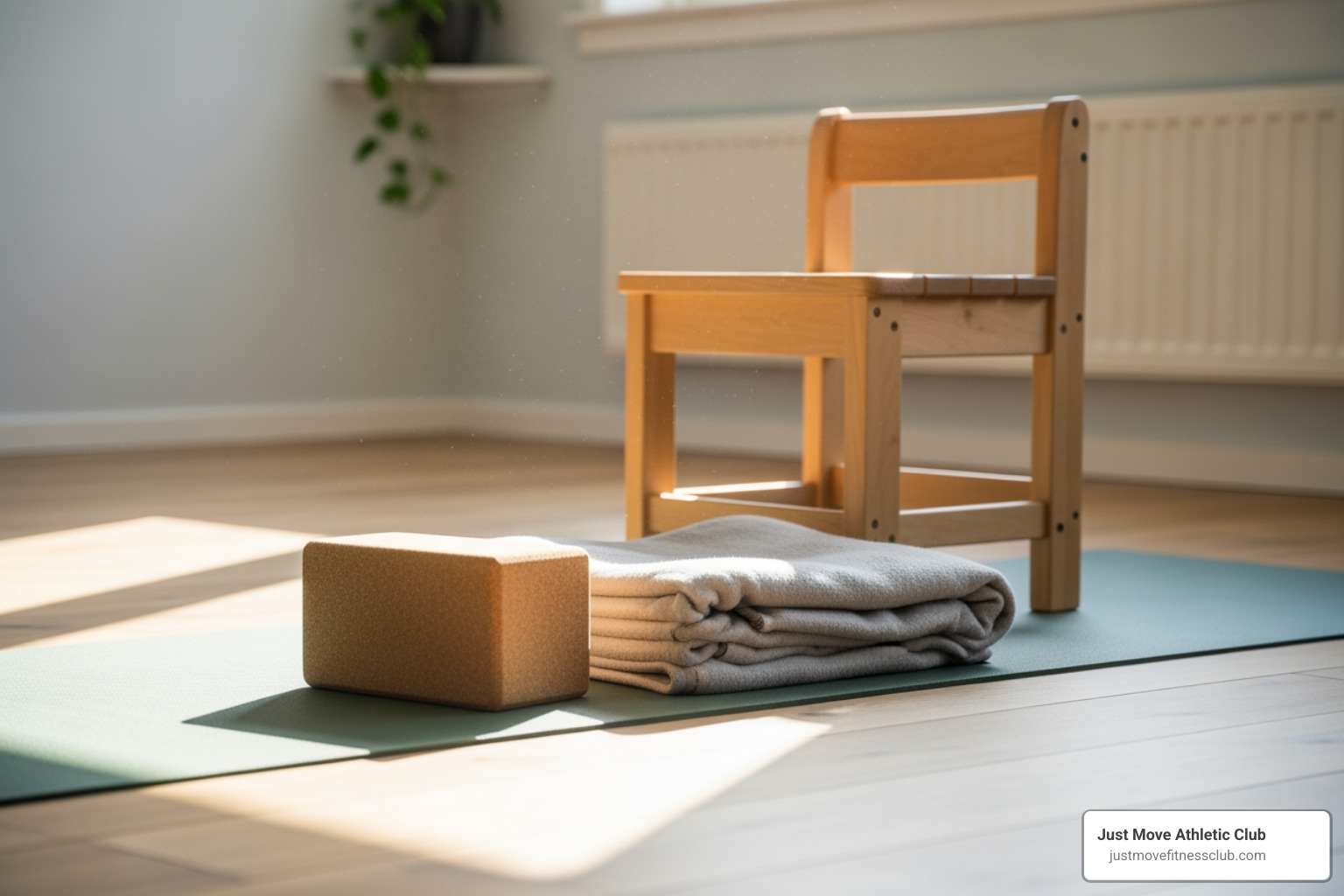
Once you have the green light, you only need a few basic items. A sturdy chair is essential for support, and comfortable, stretchy clothing allows you to move freely. A yoga mat is helpful for cushioning and grip. Props like blocks, straps, and blankets are excellent tools for making poses more accessible.
If you’re new to fitness, our article on New to the Gym? Here’s How to Get Started Without Feeling Overwhelmed offers more helpful guidance.
Essential elements of a beginner yoga practice
A well-rounded practice for seniors includes several key ingredients:
- Breathing (Pranayama): Deep, intentional breathing is the foundation. Focus on breathing slowly through your nose, allowing your abdomen to expand. This calms the nervous system and improves circulation.
- Frequency and Duration: Start with two to three sessions per week, each lasting 15 to 30 minutes. Consistency is more important than intensity.
- Warm-Up and Cool-Down: Always begin with a few minutes of gentle movement, like shoulder rolls or marching in place, to prepare your body. End each session with gentle stretches and a few moments of quiet rest to allow your heart rate to return to normal.
Essential tips for yoga for aged beginners
- Stability First: Always use a wall or chair for support when you need it. Smart practice is safe practice.
- Never Push Through Pain: You should feel gentle stretching, but sharp pain is a signal to stop or modify the pose. There is a difference between discomfort and pain.
- Consistency Over Intensity: A short, regular practice is far more beneficial than one exhausting session once in a while.
- Celebrate Progress: Acknowledge every small improvement, whether it’s holding a pose longer or feeling more stable. This is what your yoga journey is all about.
Chair Yoga: The Ultimate Accessible Practice for Aged Beginners
For many seniors, the biggest barrier to starting yoga is the thought of getting on and off the floor. This is exactly why chair yoga is a game-changer for yoga for aged beginners.
What is Chair Yoga?
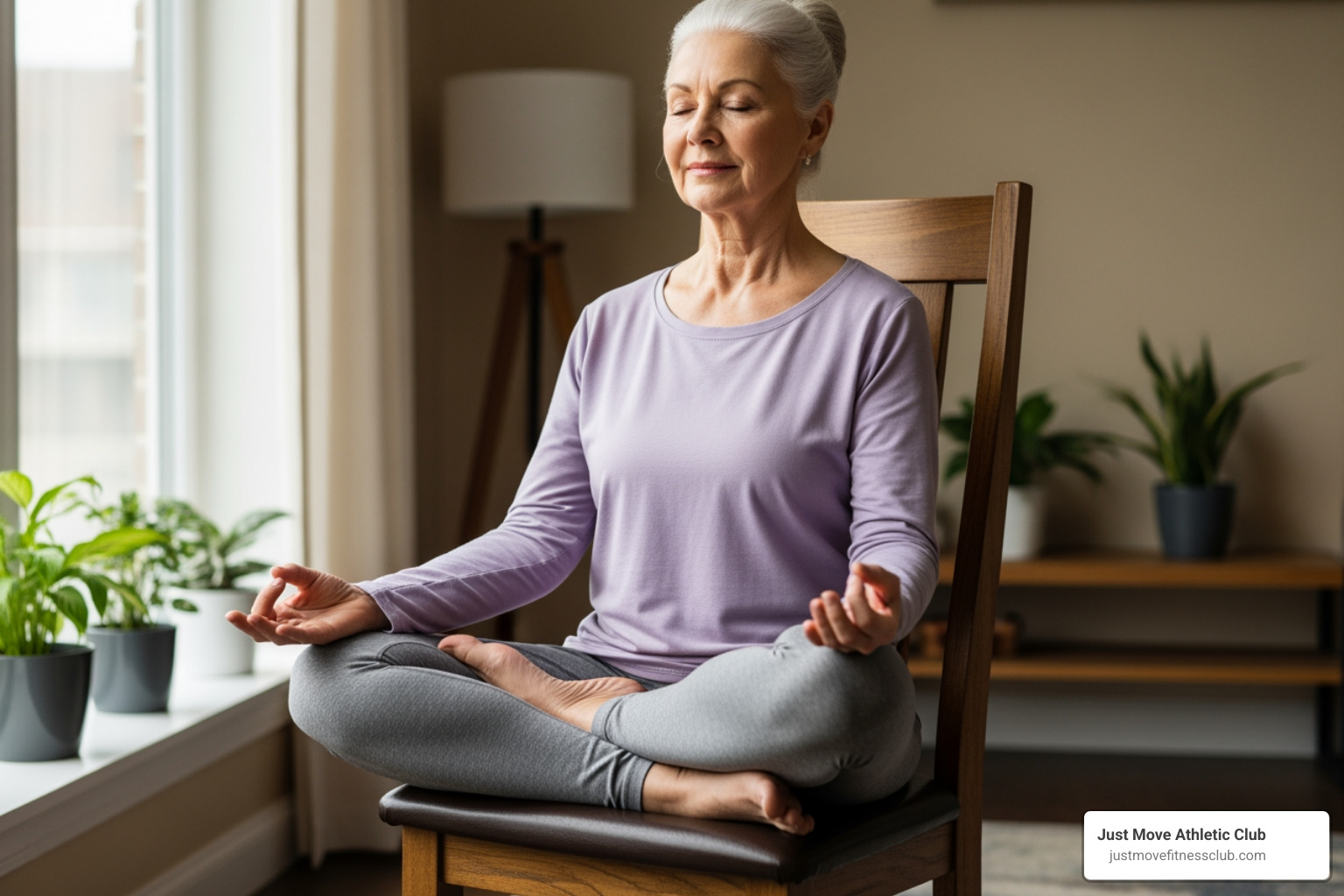
Chair yoga adapts traditional poses so they can be done while seated or using a chair for support. It’s not a “watered-down” version of yoga; it’s a smart modification that makes the practice accessible to anyone with limited mobility, balance concerns, or joint issues. The chair provides a stable foundation, removing fear and allowing you to focus on your breath and movement. This security helps your muscles relax more deeply and lets you perform poses with better form and less risk.
Research shows that chair yoga participants report a significant reduction in their fear of falling and even decrease their reliance on assistive devices. It builds confidence through safe, supported movement, making it an inclusive practice for everyone.
5 Simple Seated Poses to Try Today
Ready to try? Grab a sturdy, non-wheeled chair and sit toward the edge with your feet flat on the floor.
-
Seated Mountain Pose (Tadasana): This is your starting point. Sit tall, with your arms resting at your sides. Roll your shoulders back and down to open your chest. Lengthen your spine as if a string is pulling the crown of your head upward. Breathe deeply for 5-10 breaths.
-
Seated Cat-Cow (Marjariasana): Place your hands on your knees. On an inhale, arch your back and lift your chest (Cow). On an exhale, round your spine and tuck your chin (Cat). Flow between these two poses for 5-10 breaths to relieve back and neck tension.
-
Seated Spinal Twist (Ardha Matsyendrasana variation): Sit tall and place your right hand on your left knee, with your left hand on the chair behind you. Gently twist your torso to the left. Hold for 3-5 breaths, then repeat on the other side. This gentle twist can help promote good digestion.
-
Seated Forward Bend (Paschimottanasana variation): Inhale to sit tall, then exhale and hinge forward from your hips, letting your torso fold over your thighs. Let your head and neck relax. Hold for 3-5 breaths. This pose is wonderfully calming and stretches the back and hamstrings.
-
Eagle Arms (Garudasana variation): Extend your arms forward, bring your right arm under your left, and bend your elbows. Try to bring your palms together (or the backs of your hands). Lift your elbows slightly and feel the stretch across your upper back. Hold for 3-5 breaths, then switch sides.
How chair yoga improves balance and prevents falls
It may seem counterintuitive, but sitting in a chair can significantly improve your balance. Chair yoga works by engaging your core muscles for stability, strengthening the supporting muscles in your legs and hips, and building confidence in your movement. It also cultivates proprioception—your body’s sense of where it is in space. A strong core, confident movement, and better body awareness are all key to staying steady on your feet and preventing falls.
Beyond the Chair: Gentle Mat & Standing Poses
Once you’ve built confidence with chair yoga, you might feel ready to explore gentle mat and standing poses. This transition should be gradual, with safety as your top priority. You’re not leaving support behind; you’re simply expanding your practice using walls and chairs as your steady companions. This is functional fitness, which is vital for maintaining independence. For more on this, consider our article on The Importance of Functional Training in Everyday Life.
Essential standing and mat yoga for aged beginners
These poses build strength and balance that directly support daily life. Always have a sturdy chair or wall nearby for support.
-
Mountain Pose (Tadasana): The foundation of all standing poses. Stand with feet hip-width apart, feeling all four corners of your feet on the floor. Roll your shoulders back and down, engage your leg muscles, and lengthen your spine. This teaches proper alignment for everything you do.
-
Warrior II (Virabhadrasana II) with chair support: A powerful pose for leg strength and hip opening. Stand with feet wide, turn your right foot out, and bend your right knee over your ankle. Keep the back leg straight. For support, place a chair under your front thigh or stand with your back against a wall. Hold for 3-5 breaths, then switch sides.
-
Tree Pose (Vrksasana) with wall support: The classic balance pose, made accessible.
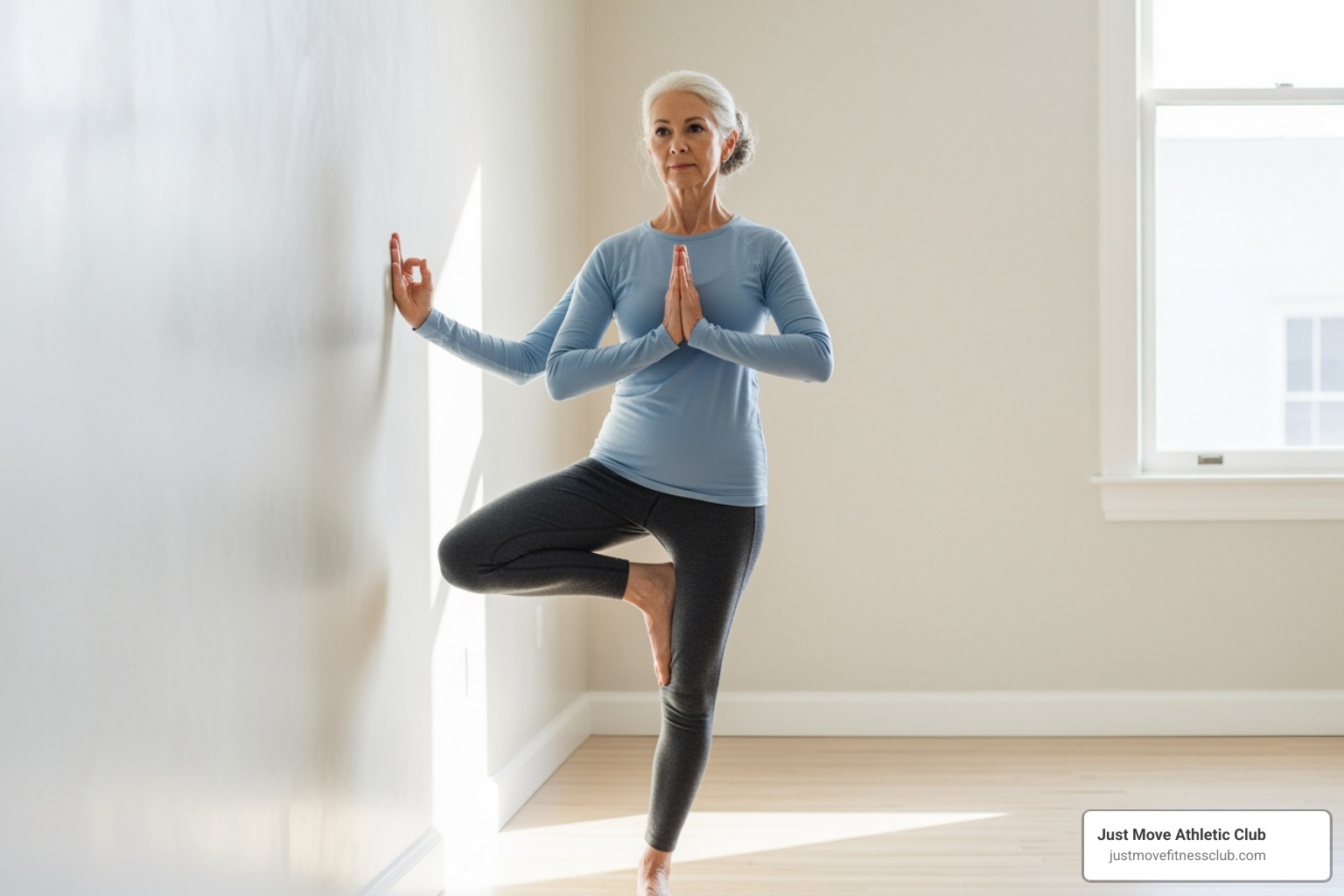
Stand near a wall for support. Shift your weight to one leg and place the sole of your other foot on your inner ankle, shin, or thigh—never on the knee joint. Hold for 20-30 seconds, focusing on a steady spot. Wobbling is normal; it’s your body learning to balance.
-
Bridge Pose (Setu Bandhasana) with a block: Strengthens your back and glutes. Lie on your back with knees bent and feet flat on the floor. For a supported version, place a yoga block under your sacrum (the flat bone at the base of your spine) and rest. Or, press into your feet to lift your hips. Hold for 5-10 breaths.
-
Child’s Pose (Balasana) with a blanket: A calming resting pose. Kneel and fold forward, resting your torso on or between your thighs. If needed, place a rolled blanket between your thighs and calves for support. Rest your forehead on the mat or a block.
How to Modify Poses for Your Body
The secret to a sustainable practice is adapting poses to fit your body.
- Use Props: Blocks, straps, and blankets are smart tools, not crutches. They make poses safer and more comfortable.
- Reduce Range of Motion: Focus on the sensation of a stretch, not how deep you can go. A slight bend in the knees during forward folds protects your back.
- Listen to Pain Signals: Sharp, pinching, or shooting pain is a sign to ease out of a pose immediately.
- Focus on Alignment Over Depth: Good form in a modified pose is far better and safer than forcing a deeper position with poor alignment.
Frequently Asked Questions about Senior Yoga
Here are answers to some common inquiries that come up when seniors consider starting a yoga for aged beginners practice.
How often should a senior beginner practice yoga?
For beginners, practicing two to three times per week is a great start. Sessions can be short—just 15-30 minutes makes a difference. Consistency is more important than duration. As you build strength and confidence, you can gradually increase how often or how long you practice. Listen to your body and let it be your guide.
What style of yoga is best for older adults?
Focus on gentler forms that emphasize slow movements and modifications. Look for classes labeled:
- Chair Yoga: The perfect starting point for anyone with mobility or balance concerns.
- Gentle or Beginner Yoga: These classes move at a slower pace and focus on alignment.
- Hatha Yoga: A classic style that is often slower-paced, giving you time to find proper alignment in each pose.
- Restorative Yoga: Uses props to support your body in deep, relaxing stretches. It’s excellent for stress reduction.
We generally advise beginners to avoid hot yoga or vigorous styles until a solid foundation is built.
Do I need to be flexible to start yoga?
Absolutely not! This is the biggest myth in yoga. Saying you’re not flexible enough for yoga is like saying you’re too dirty to take a bath. You don’t need to be flexible to start; you practice yoga to become more flexible.
Yoga for aged beginners is designed to meet you exactly where you are. With props, modifications, and supportive instruction, every pose can be adapted to your current ability. The focus is on safe movement and gradual improvement, not on achieving a perfect-looking pose.
Conclusion
You’ve taken the time to learn about yoga for aged beginners, and that’s already a powerful first step toward improving your health and well-being. The journey we’ve explored together shows just how accessible yoga truly is—from the supportive foundation of chair yoga to gentle standing poses that build strength and balance with every breath.
The benefits speak for themselves. Regular yoga practice improves your flexibility and keeps your joints healthy. It strengthens your muscles and bones, helping you maintain independence. It sharpens your balance and dramatically reduces your risk of falling—a concern that affects one in three seniors each year. Beyond the physical gains, yoga calms your mind, helps you sleep better, regulates your blood pressure, and creates a sense of peace that carries into every part of your life.
Perhaps most importantly, yoga meets you exactly where you are. You don’t need to touch your toes or balance on one leg to begin. You don’t need special equipment or a lifetime of flexibility. All you need is the willingness to start, to breathe, and to move gently in ways that honor your body.
At Just Move Athletic Club, we are dedicated to creating welcoming spaces where people of all ages and abilities can pursue their fitness goals with confidence. Our experienced instructors understand the unique needs of older adults and know how to make every class safe, effective, and enjoyable. We’re proud to serve the Lakeland, North Lakeland, South Lakeland, Winter Haven, and Havendale communities in Florida, helping our members build not just stronger bodies, but lasting friendships and genuine community.
Whether you’re looking to try your first chair yoga class, work one-on-one with a personal trainer, or track your progress with our Fit3D Pro Body Scanner, we’re here to support you. Every person who walks through our doors has their own story, their own goals, and their own pace. We celebrate them all.
It’s never too late to feel better, move easier, and live more fully. Your yoga journey is waiting, and we’d be honored to be part of it. Explore our classes and start your fitness journey today!