
Why Start with a Full Body Workout?
A full body workout program for beginners is one of the smartest ways to start your fitness journey. It’s a routine that works all major muscle groups (legs, chest, back, shoulders, arms, core) in a single session, typically performed 2-3 times per week with rest days in between.
Key benefits for beginners include:
- Higher Training Frequency: You train each muscle group 2-3 times per week. Research shows this is superior for muscle gain compared to traditional once-a-week splits.
- Time-Efficient: A complete workout takes just 45-60 minutes.
- Simple to Follow: No complex schedules are needed; just show up and work your entire body.
- Builds Foundational Strength: It focuses on compound exercises, which are perfect for learning proper form on basic movements.
Starting at the gym can feel overwhelming, but a full body routine simplifies the process. This approach is backed by science. According to research published in Sports Medicine, training muscles more than once a week produces better results than the traditional body part splits many beginners attempt.
I’m Pleasant Lewis JMAC, founder of Just Move Athletic Clubs with over 40 years in the fitness industry, and I’ve helped thousands of beginners build strength and confidence with well-structured full body workout programs for beginners. This guide will give you everything you need to start training effectively and safely.

A full body routine differs from other training splits (like upper/lower or “chest day”) by emphasizing frequency. Hitting each muscle group multiple times per week provides more opportunities to stimulate muscle growth and practice proper form, leading to faster progress. Its simplicity also makes it ideal for new gym-goers. For more insights on easing into exercise, check out our guide on how to start exercising.
The Science-Backed Benefits for Beginners
Starting with a full body workout program for beginners is scientifically proven to be highly effective. Here’s why:
- Faster Muscle Gains: Studies, like those referenced here, confirm that higher training frequency leads to superior muscle development.
- Improved Strength: By repeatedly using compound movements, you’ll build foundational strength across your entire body.
- Efficient Calorie Burn: Engaging multiple large muscle groups in one session burns more calories during and after your workout.
- Improved Motor Learning: Frequent practice of key movements helps you master proper form faster, reducing injury risk and setting you up for long-term success.
- Foundational Strength Building: These workouts build a strong, functional base that translates to everyday activities and future training.
The American College of Sports Medicine (ACSM) supports this, recommending that beginners engage in full body workouts 2-3 times per week, with at least 48 hours of rest between sessions.
Your 3-Day Full Body Workout Program for Beginners
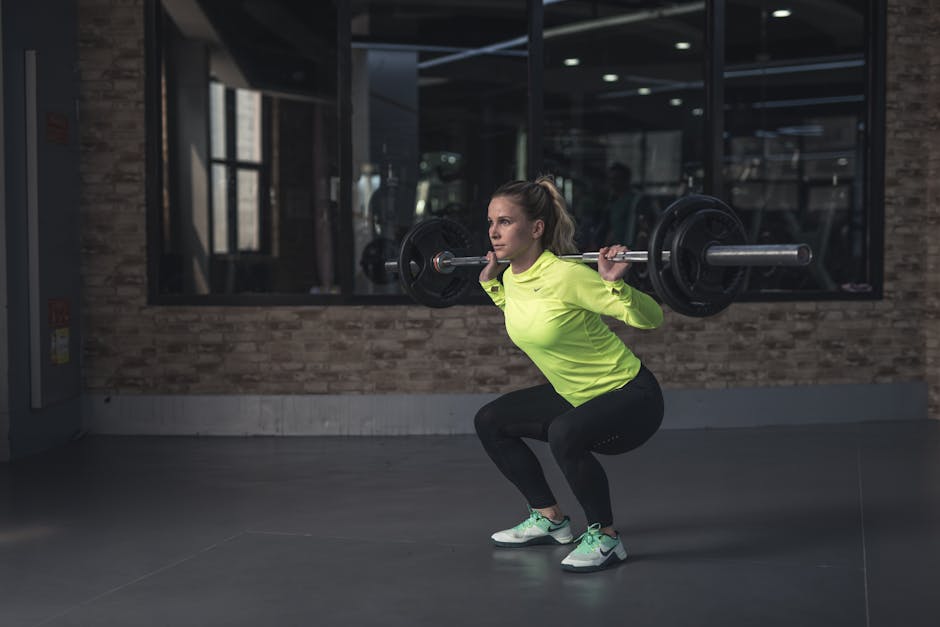
Now that you understand the ‘why,’ let’s get to the ‘how.’ This full body workout program for beginners is built on compound movements—exercises like squats and presses that work multiple muscles at once. We’ll also add some isolation exercises to target specific muscles.
For most beginners, a 3-day split on non-consecutive days (e.g., Monday, Wednesday, Friday) is ideal. This provides a perfect balance of training frequency and recovery time, which is when your muscles actually grow. If you’re nervous about your first gym visit, our guide on how to get started without feeling overwhelmed can help.
| Feature | 2-Day Full Body Split | 3-Day Full Body Split |
|---|---|---|
| Training Days | 2 days per week (e.g., Mon/Thu) | 3 days per week (e.g., Mon/Wed/Fri) |
| Muscle Group Hits | 2 times per week | 3 times per week |
| Total Weekly Volume | Lower | Moderate to Higher |
| Recovery | Excellent (more rest days) | Good (adequate rest between sessions) |
| Best For | Very limited schedule, easing into exercise, active recovery | Most beginners, faster progress, balanced frequency and recovery |
| Progress Rate | Moderate | Faster |
While a 2-day split can work, the 3-day approach accelerates progress without compromising recovery.
Structuring Your Workouts: Sets, Reps, and Rest
Here’s the language of strength training, simplified:
- Set: A group of repetitions performed without stopping.
- Repetition (Rep): One complete movement of an exercise.
For this program, you’ll work in the 8-12 rep range for most exercises to build both strength and muscle. For rest, take 90-120 seconds between large compound movements and 60-90 seconds for smaller isolation exercises.
When choosing your starting weight, pick a weight that lets you complete all reps with good form, where the last 1-2 reps feel challenging but doable. This corresponds to a Rate of Perceived Exertion (RPE) of 7-8 out of 10. When in doubt, always start lighter.
The Ultimate 3-Day Full Body Workout Program for Beginners
This program alternates between two workouts—Workout A and Workout B—on non-consecutive days. For example: Week 1 is A/B/A, and Week 2 is B/A/B. This ensures balanced development.
What you’ll need: A set of dumbbells, an adjustable bench, and optional resistance bands. Before starting, watch the video links to see proper form.
Workout A
- Goblet Squats – 3 sets of 8-12 reps
- This teaches proper squat mechanics while building your quads, glutes, and core.
- Dumbbell Bench Press – 3 sets of 8-12 reps
- A classic chest builder that also works your shoulders and triceps. Using dumbbells helps prevent strength imbalances.
- Dumbbell Bent-Over Rows – 3 sets of 8-12 reps
- Strengthens your upper back, lats, and biceps. Hinge at the hips and keep your back flat.
- Seated Dumbbell Shoulder Press – 2 sets of 10-15 reps
- Builds shoulder strength and stability. Sitting helps you focus on your shoulders.
- Plank – 3 sets, hold for 30-60 seconds
- A core stability exercise. Maintain a straight line from your head to your heels.
Workout B
- Dumbbell Romanian Deadlift – 3 sets of 8-12 reps
- Teaches the essential hip-hinge pattern and targets your hamstrings and glutes.
- Lat Pulldowns or Assisted Pull-ups – 3 sets of 8-12 reps
- Builds vertical pulling strength in your lats and upper back.
- Push-ups (on knees or toes) – 3 sets to near failure
- An excellent chest, shoulder, and tricep builder. Start on your knees if needed.
- Alternating Biceps Curls – 2 sets of 10-15 reps per arm
- Direct arm work for your biceps. Control the weight on the way down.
- Overhead Triceps Extensions – 2 sets of 10-15 reps
- Targets the triceps, which make up most of your upper arm mass.
Progressing and Avoiding Common Mistakes

The secret to long-term improvement is progressive overload—gradually increasing the challenge your muscles face over time. This doesn’t always mean lifting heavier. You can also progress by adding reps or sets, or simply by improving your form.
As your technique becomes more efficient, you’ll naturally be able to handle more weight or reps. That’s why focusing on form is crucial for long-term results. For more on structuring your training, check out our guide on how to build a balanced workout routine.
How to Progress Your Full Body Workout Program for Beginners
Track your workouts. Use a notebook or an app to record your exercises, sets, reps, and weight for each session. This is the only way to ensure you’re consistently progressing.
- When to Increase Weight: Use the “two-for-two rule.” If you can complete two more reps than your target for two consecutive workouts, it’s time to add a small amount of weight (2.5-5 lbs).
- Add Sets or Reps: If you’re stuck at a weight, try adding another rep to each set or adding an extra set to the exercise.
- Introduce New Exercises: After 4-8 weeks, you can swap in variations to keep things fresh. For example, switch from dumbbell bench press to incline dumbbell press. As long as you’re making progress, there’s no rush to change your routine.
Common Pitfalls and How to Avoid Them
Most beginner mistakes are easily avoidable once you know what to look for.
- Ego Lifting: This is lifting weights that are too heavy, causing your form to break down. Perfect form with a lighter weight is always better and safer than sloppy form with a heavy weight.
- Inconsistent Training: Results come from consistency. Aim for your three workouts per week to build a sustainable habit.
- Neglecting Rest and Recovery: Your muscles grow while you rest, not while you train. Prioritize sleep and don’t skip your rest days.
- Not Warming Up or Cooling Down: A 5-10 minute warm-up prepares your body for exercise, while a cool-down aids recovery. Don’t skip them.
- Overexertion: Pushing too hard, too soon can lead to burnout or injury. Research shows overexertion is a common cause of injuries. Learn to distinguish between the productive burn of muscle fatigue and sharp pain, which is a warning sign to stop.
Fueling Your Fitness: Nutrition and Special Considerations

You can’t out-train a poor diet. To get the most from your full body workout program for beginners, you need to fuel your body properly. Your body requires protein to rebuild muscle, carbohydrates for energy, healthy fats for hormone function, and plenty of water for overall performance.
If you’re just starting out, our “Top Tips for Getting Started on Your Fitness Journey: A Beginner’s Guide” breaks down the essentials.
Nutrition Basics for Muscle Growth and Recovery
- Protein: This is the building block for muscle repair. Aim for 0.7 to 1 gram of protein per pound of body weight daily. Good sources include chicken, fish, eggs, Greek yogurt, and legumes.
- Carbohydrates: These are your body’s primary energy source. Focus on complex carbs like whole grains, sweet potatoes, and vegetables for sustained energy.
- Healthy Fats: These are essential for hormone production. Include sources like avocados, nuts, seeds, and olive oil in your diet.
- Meal Timing: A balanced meal with carbs and protein 1-2 hours before your workout provides energy. A similar meal post-workout helps jumpstart recovery.
- Calorie Intake: To build muscle, you generally need a slight calorie surplus. For fat loss, you need a slight deficit.
Special Considerations for Beginners Over 40
Starting a fitness journey after 40 is one of the best things you can do for your health, but it requires a smarter approach.
- Joint Health: Choose joint-friendly exercise variations, such as goblet squats instead of heavy barbell squats, to reduce stress on your knees and back.
- Benefits of Resistance Training: Lifting weights is a powerful tool against aging. Research shows it can counteract age-related muscle loss, helping you maintain strength and bone density.
- Warm-ups and Recovery: A thorough 10-15 minute warm-up is essential. You may also need longer recovery times between workouts, so listen to your body and take an extra rest day if needed.
- Listen to Your Body: This is crucial at any age, but especially after 40. If an exercise causes pain, stop. Modify the movement, reduce the weight, or choose a different exercise.
Frequently Asked Questions
Here are answers to common questions about starting a full body workout program for beginners.
How long should my workouts take?
Your workouts should take about 45-60 minutes. This includes a 5-10 minute warm-up, the 30-45 minute main workout, and a 5-10 minute cool-down. This timeframe is both efficient and sustainable for long-term results.
Should I feel sore after every workout?
No, soreness is not a requirement for progress. When you first start, you’ll likely experience Delayed Onset Muscle Soreness (DOMS), but this will decrease as your body adapts. What matters is progressive overload, not chasing soreness. It’s important to distinguish between general muscle soreness (a dull ache) and pain (sharp, localized). If you feel pain, stop the exercise.
Can I do cardio with this program?
Absolutely. Cardio is great for heart health and overall conditioning. You can either perform 15-20 minutes of low-intensity cardio after your weight training or do it on your off-days. Good beginner options include brisk walking, light jogging, or cycling. As you get fitter, you might explore our Beginner HIIT Workout. The key is to balance cardio with your strength training so it doesn’t interfere with your recovery.
Start Your Strength Journey Today
You now have a complete blueprint to start building strength. You understand why a full body workout program for beginners is so effective, how to structure your training, and how to fuel your body. The most important step is getting started.
Remember these key principles:
- Consistency beats perfection. Showing up regularly is what creates real, lasting change.
- Focus on form over weight. Master the movements first to build a strong, injury-free foundation.
- Listen to your body. Rest is when you grow stronger. Know the difference between productive discomfort and pain.
At Just Move Athletic Club, we know that starting can be overwhelming. That’s why our certified personal trainers in Lakeland and Winter Haven are here to guide you, customize this program, and ensure your form is safe. We are dedicated to helping you track your progress and providing a community that is welcoming to all fitness levels.
Our team is here to support you. Visit Just Move Athletic Club to learn more and get started with a team that cares about your success.
Your strength journey starts the moment you decide you’re worth the effort. And you absolutely are.