
Why Yoga for Middle Aged Beginners is the Reset You Need
Yoga for middle aged beginners offers a gentle, effective path to better health, flexibility, and stress relief—no experience required. Here’s what you need to know:
- Start with 20-25 minutes of gentle evening yoga, 2-3 times per week.
- Focus on foundational poses like Child’s Pose and Cat-Cow.
- Use props (blocks, straps) to make poses accessible.
- Prioritize breath work to activate your body’s relaxation response.
- Listen to your body—flexibility is a result of practice, not a requirement.
Juggling life in your 30s, 40s, or 50s often leads to stiff shoulders from desk jobs and mental fatigue from multitasking. As your body changes, you might notice shifts in metabolism, flexibility, and stress tolerance.
The good news? Yoga meets you exactly where you are. It’s a powerful tool for renewal that calms your mind, relaxes tight muscles, and prepares you for restorative sleep.
This guide is your starting point for a safe, rewarding yoga practice that fits your busy life. I’m Pleasant Lewis, founder of Just Move Athletic Clubs, and with over 40 years in fitness, I’ve seen yoga transform lives. Let’s get you started with confidence.
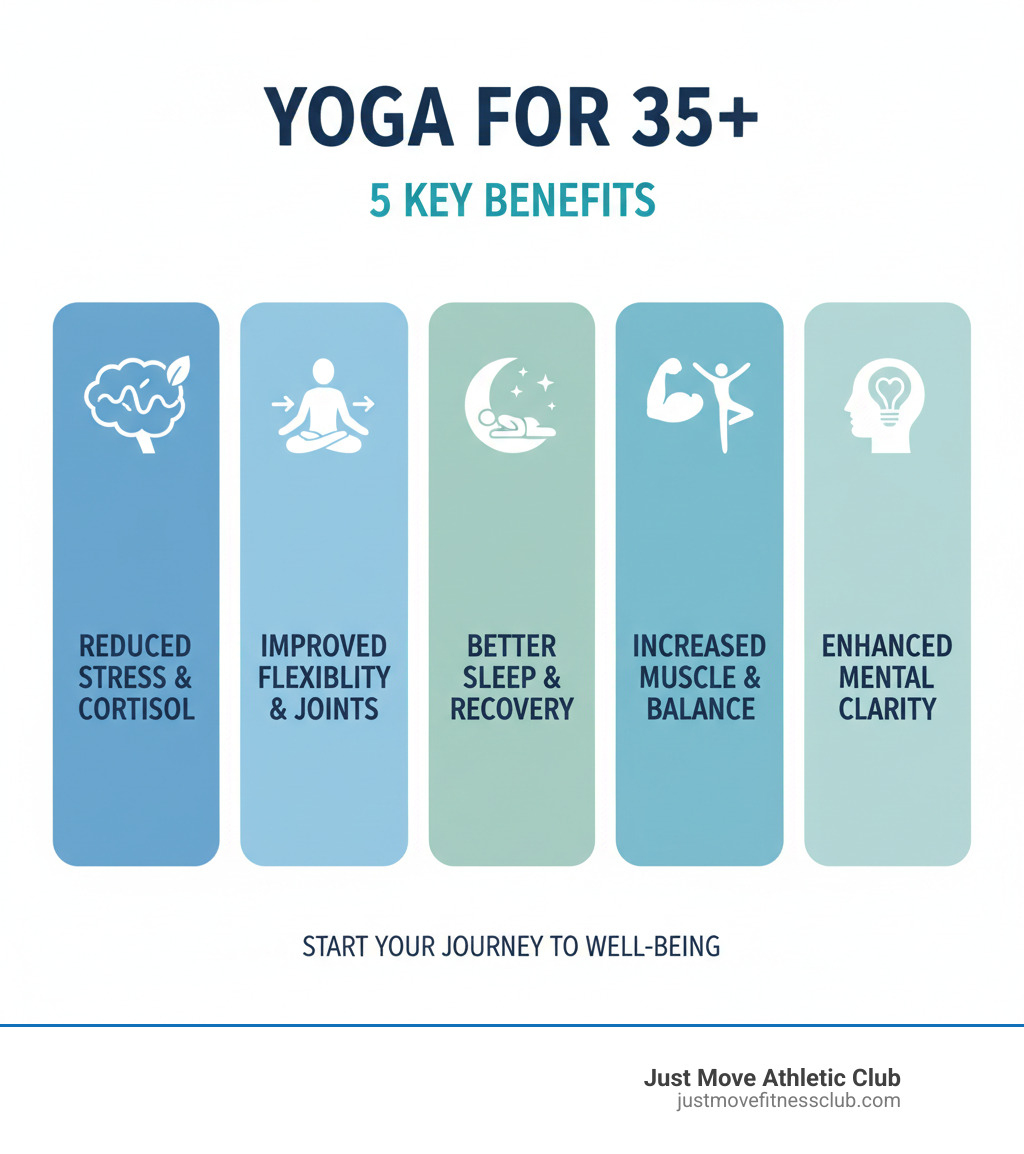
Why Yoga is the Perfect Reset for Your 30s, 40s, and Beyond
As we age, our bodies change. It’s normal to experience a shifting metabolism, declining flexibility, and persistent stiffness from desk jobs. Add in the mental fatigue from juggling daily responsibilities, and it’s clear why so many people in their 30s, 40s, and beyond feel worn out.
This is where yoga for middle aged beginners becomes a powerful tool. It’s a holistic practice that meets these age-related changes head-on, offering a path to feeling more like yourself again. The vast benefits of regularly practicing yoga are well-documented, and they become even more meaningful as we get older.
Stress Reduction: A Natural Antidote to Daily Pressures
Chronic stress from work and family life can manifest as tight shoulders, headaches, and restless nights. Evening yoga acts as a natural antidote by creating space to release physical and mental tension.
Yoga has a measurable impact on stress hormones. For instance, cortisol regulation is key for combating stress. A 2017 study found that middle-aged women had significantly lower cortisol levels after practicing yoga. By shifting your nervous system into a calmer state, yoga provides a moment of personal renewal and helps you manage daily pressures with a clearer head.
Physical Benefits: Reclaiming Flexibility, Strength, and Balance
Yoga offers tangible physical benefits that directly address the changes in your body.
- Improved Flexibility: Yoga gently stretches and lengthens muscles, especially in tight areas like the shoulders, hips, and lower back, working against the natural decline in flexibility that comes with age.
- Muscle Strength: Poses like Plank and Bridge build functional strength, supporting your joints and boosting your metabolism. You can learn more about why yoga should be part of your fitness routine.
- Better Balance: By challenging your stability in a safe way, yoga strengthens stabilizing muscles, which reduces the risk of falls and improves confidence in everyday movements.
- Improved Body Awareness: Yoga teaches you to listen to your body’s signals, helping you distinguish between a healthy stretch and pushing too far.
Sleep Quality: Your Gateway to Deeper Recovery
If you struggle with racing thoughts or physical tension at night, evening yoga can be a game-changer. It actively prepares your body for rest by activating the parasympathetic nervous system—your body’s “rest and digest” mode. This lowers your heart rate and blood pressure.
Gentle stretches release accumulated tension, while breathing techniques quiet the mind. This combination creates the conditions for a deeper, more restorative sleep cycle. Quality sleep is crucial for hormonal balance, cellular repair, and overall recovery, and an evening yoga practice can become a powerful ritual for winding down.
Your First Steps: How to Prepare and Build a Lasting Habit
Starting yoga for middle aged beginners is simple. You don’t need a dedicated yoga studio or hours of free time—just a comfortable space, a few basic tools, and a gentle approach. Here’s how to set yourself up for a sustainable and nurturing practice.
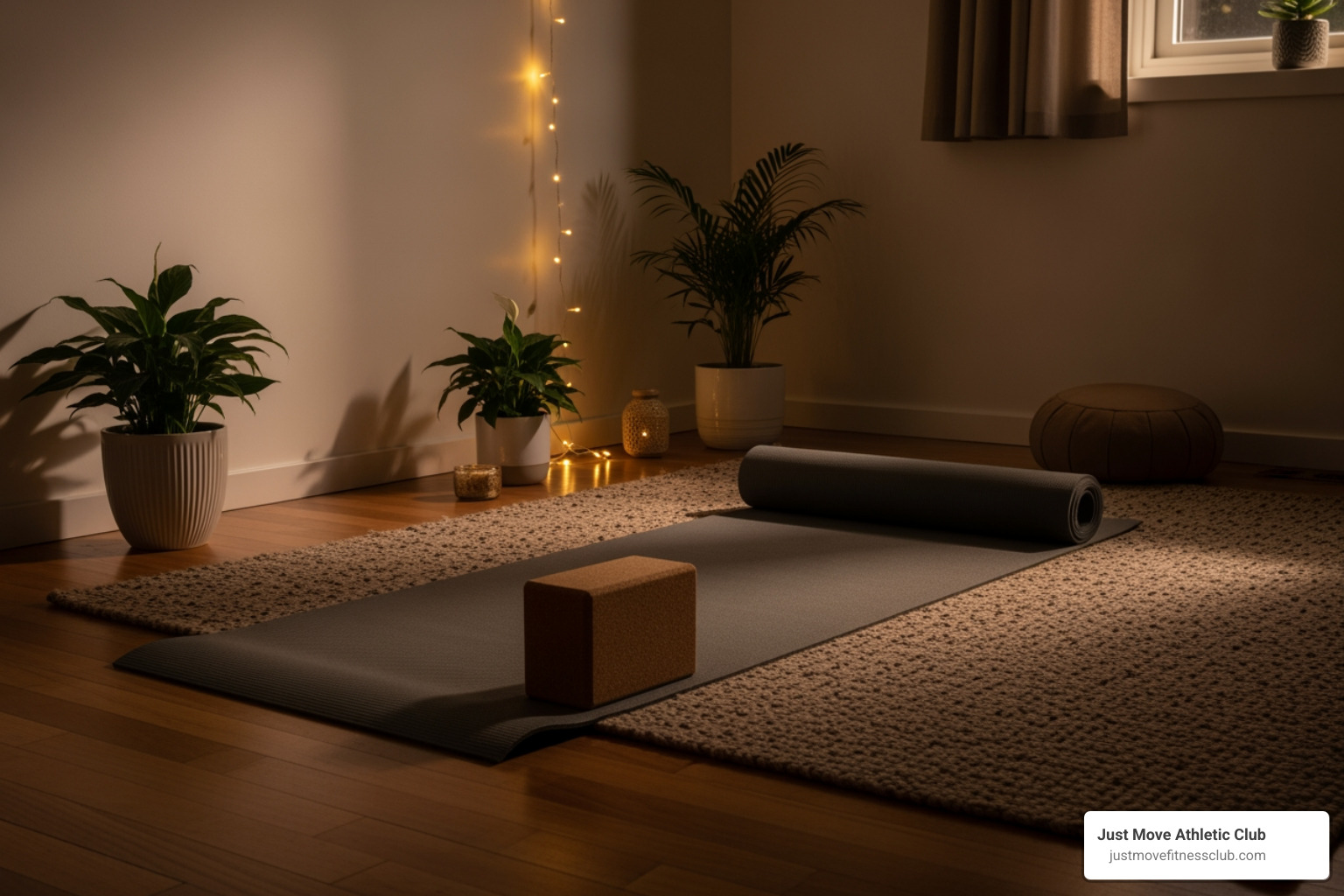
Creating Your Sanctuary
Find a quiet corner and create a calm environment that signals it’s time to wind down.
- Use dim lighting and play soft music or nature sounds.
- Ensure minimal distractions by silencing your phone and letting family know you need uninterrupted time.
- Set an intention before you begin, such as “I am here to release today’s tension,” to help your mind shift gears.
Gearing Up for Success
You need very little to get started with yoga for middle aged beginners.
- Comfortable clothing that moves with you is all you need.
- A yoga mat is your one essential investment for cushioning and a non-slip surface.
- Props are game-changers for beginners. Consider using:
- Yoga blocks to bring the floor closer to you.
- A yoga strap to extend your reach in stretches.
- A cushion or bolster for support in seated and restorative poses.
Props are smart tools that help you practice safely and effectively. For more tips, see our beginner’s guide to starting a fitness journey.
Making it a Sustainable Ritual
Consistency is the key to building a lasting habit.
- Start small with 15-25 minutes of practice, 2-3 times a week.
- Schedule it in your calendar to treat it like an important appointment.
- Consistency matters more than intensity.
- Find a community to stay motivated. At Just Move Athletic Club, our group fitness classes in Lakeland and Winter Haven provide a supportive environment for all levels. As we explain in the power of group fitness, practicing with others brings accountability and joy.
- Track your progress by noticing small victories, like holding a pose longer or feeling calmer. These moments will keep you motivated.
A Gentle 20-Minute Routine: The Best Yoga for Middle Aged Beginners
This gentle 20-25 minute evening routine is designed for yoga for middle aged beginners. It focuses on relaxation and releasing tension to prepare you for a restorative night’s sleep. Listen to your body, modify as needed, and focus on how each pose feels rather than achieving perfect form.
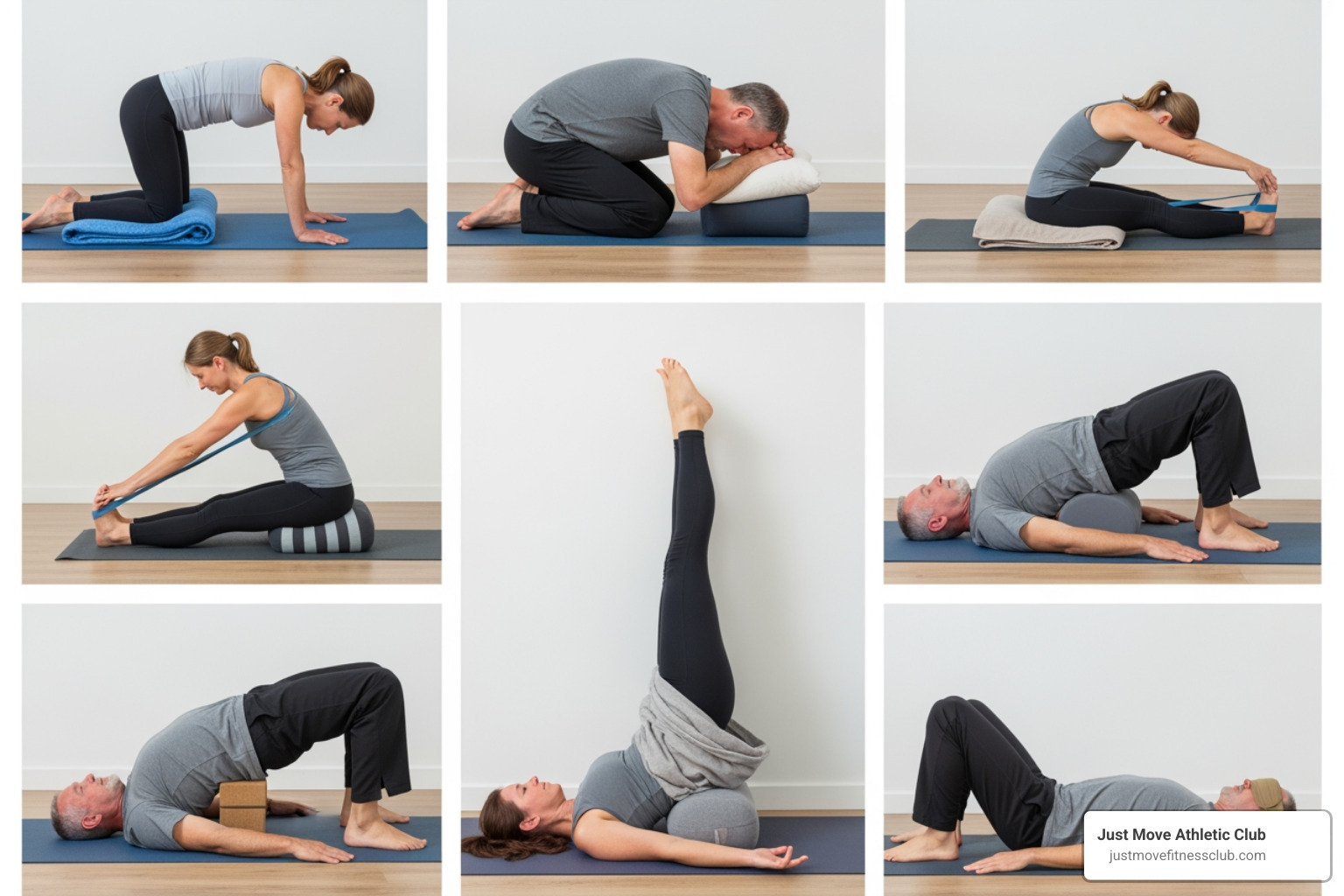
Foundational Poses for Evening Relaxation
Hold each pose for several deep breaths, allowing your body to soften.
- Sukhasana (Easy Pose): Sit comfortably on a cushion with your shins crossed. Keep your spine long and shoulders relaxed. Close your eyes and focus on your breath for a few moments to ground yourself.
- Cat-Cow Stretch (Marjaryasana-Bitilasana): On all fours, inhale to arch your spine and lift your gaze (Cow). Exhale to round your spine, tucking your chin (Cat). Flow between these two poses for 5-10 breaths to gently mobilize your spine.
- Child’s Pose (Balasana): From all fours, bring your big toes to touch, widen your knees, and sink your hips back to your heels. Rest your forehead on the mat. This calming pose stretches the hips and lower back. Hold for 1-2 minutes.
- Seated Forward Bend (Paschimottanasana): Sit with legs extended. Inhale to lengthen your spine, then exhale and hinge forward from your hips. Keep a slight bend in your knees to protect your lower back. This calms the nervous system. Hold for 30-60 seconds.
- Bridge Pose (Setu Bandhasana): Lie on your back with knees bent and feet flat on the floor, hip-width apart. Inhale and lift your hips. This pose strengthens the back and opens the chest, counteracting slouching. Hold for 30 seconds.
- Legs-Up-the-Wall Pose (Viparita Karani): Scoot your hips close to a wall and extend your legs up against it. This gentle inversion calms the mind and reduces swelling in the legs. Rest here for 5-10 minutes.
- Supine Spinal Twist (Supta Matsyendrasana): Lie on your back, hug your knees to your chest, then let them fall to one side while keeping your shoulders on the floor. This releases tension in the spine and hips. Hold for 30-60 seconds per side.
Breathing Techniques for Calm and Focus
Breathwork is key to activating your body’s relaxation response. Integrating these practices is part of a holistic fitness approach.
- Diaphragmatic Breathing (Belly Breathing): Lie on your back with a hand on your belly. As you inhale through your nose, feel your belly rise. As you exhale, feel it fall. Practice for 2-5 minutes to calm your nervous system.
- Alternate Nostril Breathing (Nadi Shodhana): Sit comfortably. Use your thumb to close your right nostril and inhale through the left. Close the left nostril with your ring finger, release the thumb, and exhale through the right. Inhale right, then exhale left. Continue for 5-10 rounds to balance the mind.
How to Conclude Your Practice
The end of your practice is crucial for integrating its benefits.
- Corpse Pose (Savasana): Lie flat on your back with arms by your sides, palms up. Close your eyes and allow your body to be heavy. Rest here for at least five minutes. This is where your body absorbs the benefits of the practice.
- Body Scan Meditation: While in Savasana, bring your awareness to each part of your body, from your toes to your head, consciously inviting it to relax.
When you’re ready, gently wiggle your fingers and toes, roll to one side, and slowly press up to a seated position. Acknowledge this act of self-care.
Frequently Asked Questions
Starting yoga for middle aged beginners can bring up questions. Here are answers to common concerns we hear from members at Just Move Athletic Club in Lakeland and Winter Haven.
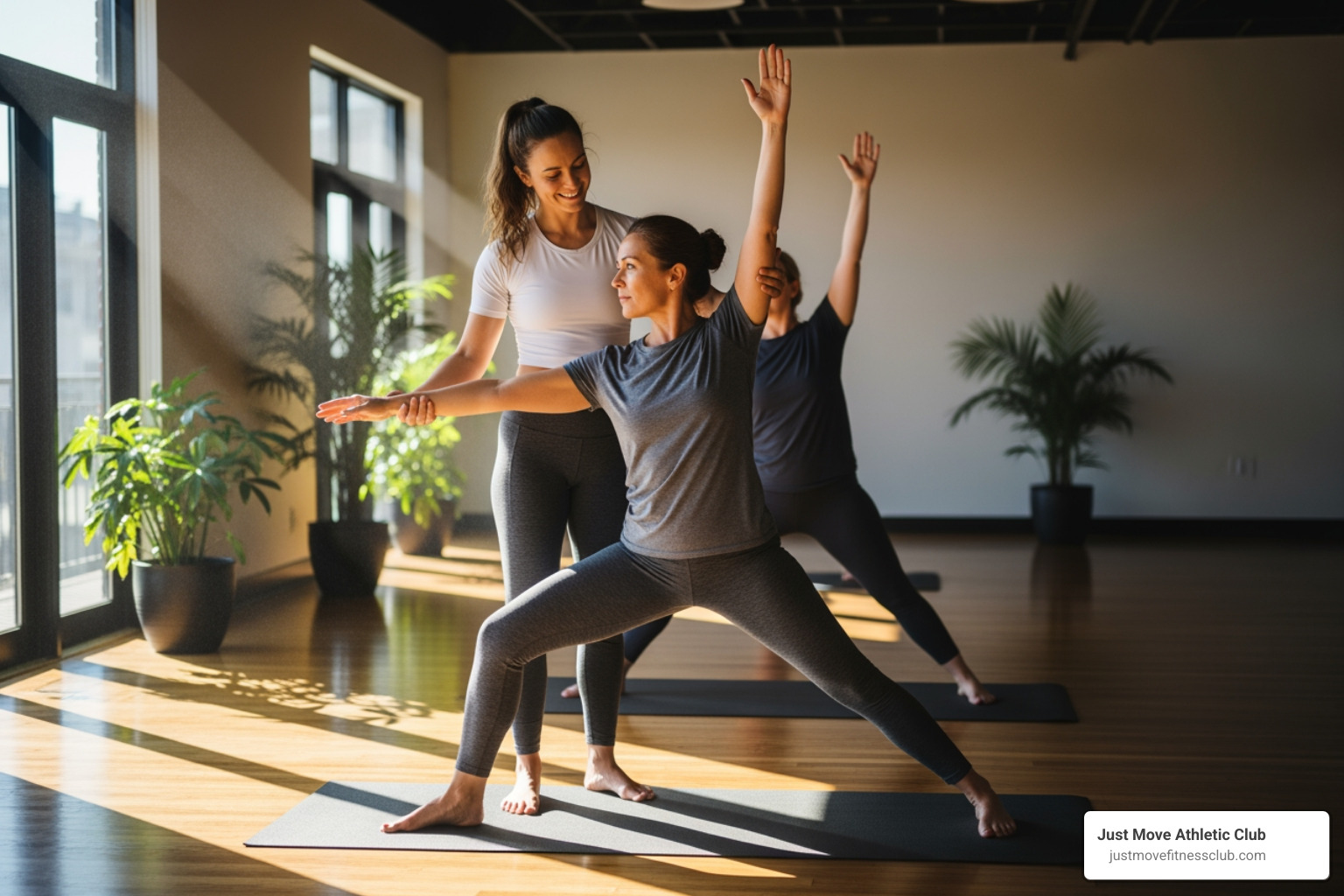
What are the most important tips for yoga for middle aged beginners?
The foundation of a safe practice is honoring your body’s unique needs. Here are our top tips:
- Listen to your body: Never push into sharp pain. Learn the difference between a healthy stretch and a strain.
- Use props: Blocks, straps, and cushions are smart tools that make poses accessible and help you focus on proper form.
- Focus on form over depth: A well-aligned, modified pose is more beneficial and safer than a deep, misaligned one.
- Avoid comparison: Your yoga journey is personal. Focus on your own progress, not what others are doing.
- Stay consistent: Practicing for 15-20 minutes regularly is more effective than one long, sporadic session. Our instructors can provide guidance, and you can find more tips in our guide to yoga in Winter Haven.
How does evening yoga for middle aged beginners specifically improve sleep?
Evening yoga is transformative for sleep because it works on multiple levels. It activates your parasympathetic nervous system (the “rest-and-digest” mode), which lowers your heart rate and blood pressure. Gentle stretches release physical tension from the day, while breathing exercises calm racing thoughts. This combination helps reduce cortisol levels, the stress hormone that can keep you awake. A 2017 study confirmed that yoga lowers cortisol in middle-aged women. The result is a mind and body prepared for a deeper, more restorative sleep cycle.
What if I’m not flexible at all?
This is the most common concern we hear, and the answer is simple: flexibility is a result of yoga, not a requirement for starting it. You don’t need to touch your toes to begin. Yoga is designed to meet you exactly where you are.
Every pose can be modified to fit your body. Bending your knees in a forward fold, sitting on a cushion, or using a strap to extend your reach are all intelligent ways to practice safely. The goal is to focus on the feeling of a gentle stretch, not the look of the pose. With consistent, patient practice, you’ll be surprised how quickly your body responds. Yoga for middle aged beginners is about gradual, sustainable progress.
Conclusion: Your Journey to Balance and Well-being Starts Now
Starting yoga for middle aged beginners is about meeting yourself where you are—stiff, tired, or simply curious—and taking a step toward self-care. This guide has shown how a gentle evening practice can provide powerful stress relief, improve flexibility and strength, and lead to better sleep.
This is a practice, not a competition. The goal is to show up for yourself, listen to your body, and be patient with the process. Some days will feel easier than others, and that’s perfectly okay. Celebrate the small victories, like a calmer mind or a deeper breath.
At Just Move Athletic Club, we know starting something new can be intimidating. That’s why our Lakeland and Winter Haven locations offer a welcoming environment for beginners. Our group fitness classes provide expert guidance and community support to help you build a sustainable practice. Our certified instructors specialize in helping you learn proper form and find modifications that work for your body.
You don’t have to do it alone. We’re here to support your journey to balance, flexibility, and inner calm. Let’s take the first step together.