
Why Pre-Workout Fueling Sets You Up for Success
Pre workout nutrition is the foundation of every great workout. When you fuel your body correctly before exercise, you boost energy levels, improve performance, and minimize muscle breakdown during training.
Quick Answer: What You Need to Know About Pre-Workout Nutrition
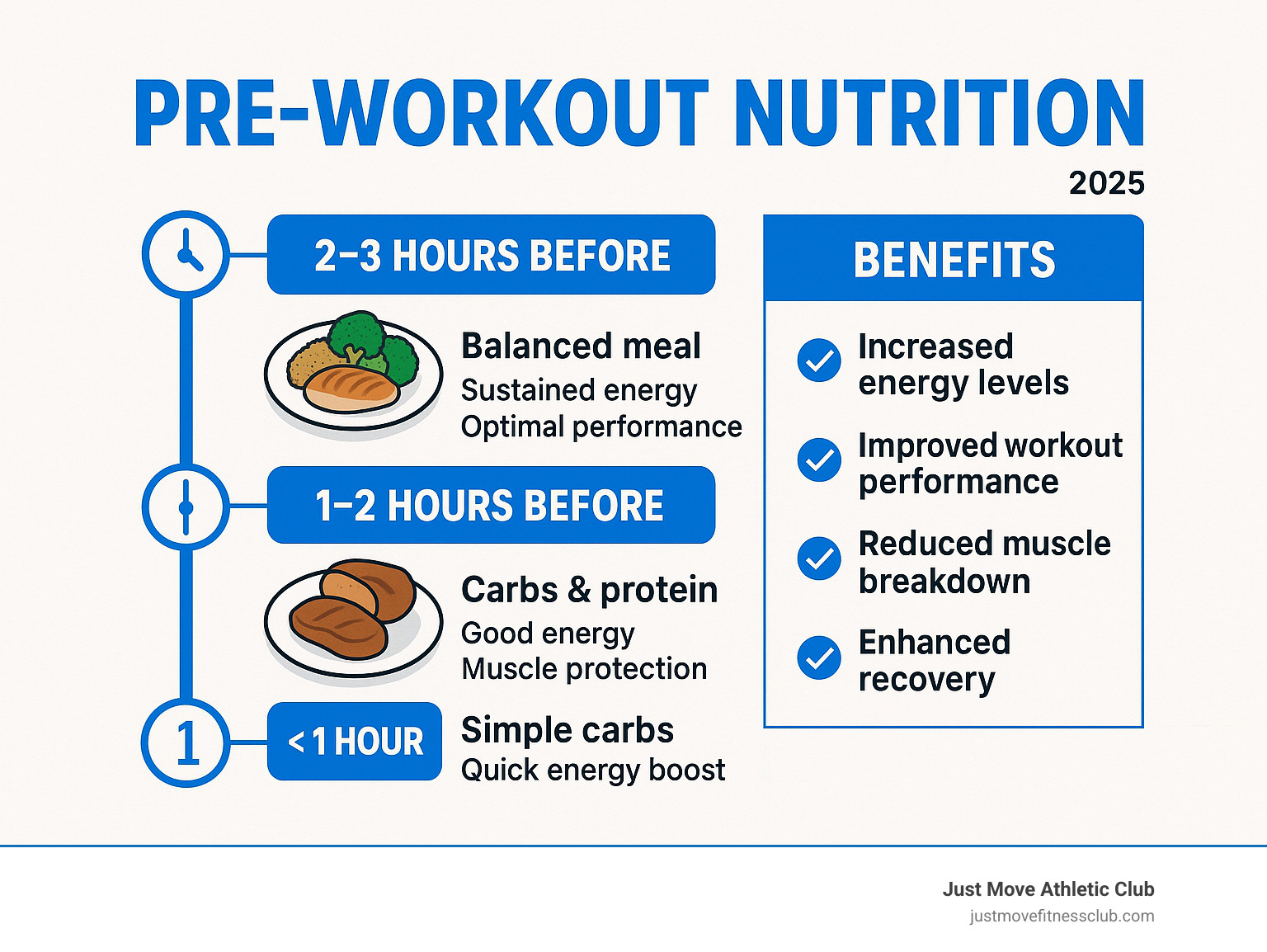
- 2-3 hours before: Balanced meal with carbs, protein, and small amount of fat
- 1-2 hours before: Focus on carbs and protein, smaller portions
- Less than 1 hour: Simple carbs only (banana, dates, or sports drink)
- Key macros: Carbs for energy, protein for muscle protection, minimal fat
- Avoid: High-fat, high-fiber, or spicy foods before training
Think of your body like a car – you wouldn’t start a long road trip with an empty gas tank. The same principle applies to your workouts. Without proper fuel, you’re setting yourself up for fatigue, poor performance, and potentially even muscle loss.
Research shows that training on an empty stomach can more than double nitrogen losses from protein breakdown. This means your hard work in the gym might actually work against your muscle-building goals. On the flip side, eating the right foods at the right time can delay fatigue, increase endurance, and help you push harder during your training sessions.
I’m Pleasant Lewis, and with over 40 years in the fitness industry, I’ve seen how pre workout nutrition can make or break someone’s training results. Through my work, I’ve helped thousands of people find the power of proper fueling strategies.
Why Fueling Up Before Exercise is a Game-Changer
Picture this: you walk into the gym feeling energized, ready to crush your workout, and you power through every set with strength to spare. Now imagine the opposite – dragging yourself through exercises, feeling dizzy, and calling it quits early. The difference? Pre workout nutrition.
Your body is like a high-performance car; you wouldn’t start a long drive on an empty tank. The science is straightforward: your body needs fuel to perform.
When you exercise, your body relies primarily on glucose for energy. This glucose comes from the carbohydrates you eat and gets stored in your muscles and liver as glycogen. Think of glycogen as your body’s energy savings account. Overnight, your liver can lose up to 80% of its stored glycogen just from normal body functions.
Starting a workout with low glycogen is like sprinting with your shoelaces tied. You’ll hit a wall fast, feel fatigued, and struggle to maintain intensity.
Proper fueling is your secret weapon. Eating the right foods at the right time tops off glycogen stores, helping you push harder, last longer, and recover better.
The risks of fasted workouts are real and can sabotage your progress. Without adequate fuel, you might experience dizziness or light-headedness during your session. Your workout intensity will likely drop, meaning you’re not challenging your muscles enough to see improvements. Even worse, your body might start breaking down muscle tissue for energy – research shows that training fasted can more than double nitrogen losses from protein breakdown.
This doesn’t mean fasted training is always bad. Some people find it works for light cardio or shorter sessions. But for strength training, HIIT, or longer workouts, you’re essentially working against yourself without proper nutrition.
The Role of Macronutrients in Your Workout
When we talk about pre workout nutrition, we’re focusing on the big three: carbohydrates, protein, and fats. These macronutrients work together like a well-coordinated team to fuel your workout and support your goals.
Each macronutrient has its own special job. Carbs provide quick energy, protein protects and builds muscle, and fats offer sustained power for longer sessions. The magic happens when you combine them strategically based on your workout timing and goals.
Understanding how these nutrients work together – what we call nutrient synergy – helps you make smarter choices about what to eat and when. It’s not just about getting calories; it’s about getting the right calories at the right time.
Carbohydrates: Your Primary Energy Source
Carbohydrates are the MVP of workout fuel, especially for high-intensity training. Your muscles love glucose – it’s their preferred energy source and burns clean and fast when you need power.
Let’s clear up a common myth right away: carbs don’t automatically make you gain weight. The truth is that glucose powers your cells, tissues, and organs, and during exercise, you need this fuel more than ever.
You have two types of carbs to choose from. Simple carbohydrates digest quickly and provide rapid energy – perfect for that banana 30 minutes before your workout. Complex carbohydrates take longer to break down but provide steady, sustained energy – ideal for your pre-workout meal a few hours earlier.
The timing matters here. Simple carbs work great when you’re short on time, while complex carbs help maintain steady blood sugar and energy levels throughout longer training sessions.
Protein: The Muscle Protector and Builder
Think of protein as your muscle’s bodyguard and construction crew all rolled into one. Made up of amino acids – the building blocks of life – protein steps in to prevent muscle breakdown during intense training.
Here’s what makes pre-workout protein so powerful: it increases muscle protein synthesis, the process where your body builds new muscle tissue. This means you’re not just preventing muscle loss during your workout; you’re actually setting the stage for growth and recovery.
Research on protein-fed workouts shows significant benefits compared to training fasted. When you have amino acids circulating in your bloodstream during exercise, your muscles stay in a more anabolic (building) state rather than breaking down for energy.
You don’t need massive amounts – even a small serving of protein before training can make a difference in how you feel and perform.
Fats: Fuel for the Long Haul
Fats are your body’s endurance fuel, providing more than twice the calories per gram compared to carbs or protein. While they’re not the star player for high-intensity bursts, fats become crucial for longer, moderate-intensity exercise.
Your body typically starts tapping into fat stores after about 20 minutes of activity. This makes healthy fats excellent for supporting longer training sessions or endurance activities.
But here’s the catch: fats digest much slower than other macronutrients. While carbs might clear your stomach in 1-2 hours, fats can take 6-8 hours to fully process. This slower digestion means eating high-fat foods too close to your workout can leave you feeling sluggish or uncomfortable.
The key is timing and portion size. Include healthy fat sources like avocados, nuts, or seeds in meals eaten several hours before training, but keep fat intake minimal in your immediate pre-workout fuel.
The Ultimate Pre-Workout Timing Guide
When it comes to pre workout nutrition, timing makes all the difference. Get it right, and you’ll feel great; get it wrong, and you might feel sluggish or uncomfortable when you need energy most.
The key principle is simple: the closer you get to your workout, the simpler your fuel should be. Think of it as a countdown to performance. Your body needs time to digest food and convert it into usable energy, but you also don’t want to feel weighed down when it’s time to move. Scientific research on meal timing shows us that strategic eating can significantly improve our exercise capacity and reduce digestive discomfort.
Your digestive system is working hard to break down food, and during exercise, blood flow shifts to your working muscles. When these two processes compete, neither works optimally. That’s why timing matters so much for maximizing energy availability while preventing those dreaded workout cramps.

If You Have 2-3 Hours Before Your Workout
This is your golden window for a proper meal. With 2-3 hours to spare, you can enjoy a balanced, satisfying meal without worrying about digestive issues during your workout. This is the time to include complex carbohydrates for sustained energy, lean protein for muscle support, and even a small amount of healthy fat for satiety.
Your meal should feel substantial but not overwhelming. Think of it as fueling up for a road trip – you want enough gas in the tank without feeling overly full. Grilled chicken with brown rice and roasted broccoli gives you that perfect balance of sustained carbs, quality protein, and nutrients. Oatmeal with berries and a scoop of protein powder offers another excellent option, combining slow-releasing oats with antioxidant-rich berries and muscle-supporting protein. Whole-wheat toast with avocado and eggs rounds out your choices with complex carbs, healthy fats in moderation, and high-quality protein.
The beauty of this timing window is flexibility. Your body has plenty of time to digest and absorb nutrients, converting them into readily available energy for your upcoming workout.
If You Have 1-2 Hours Before Your Workout
As your workout approaches, it’s time to shift gears. You want to focus on carbs and protein while keeping portions smaller and choosing easily digestible foods. This is about topping off your energy stores without overloading your system.
Greek yogurt with a banana becomes your friend here – the yogurt provides protein and some carbs, while the banana offers those easily digestible simple carbohydrates your muscles crave. A fruit smoothie with protein powder works beautifully because liquids digest faster than solid foods. Blend your favorite fruits with water or plant milk and add that protein boost. A small bowl of oatmeal can still work if you digest it well, just keep the portion smaller than you would eat hours earlier.
The key is listening to your body. Some people handle certain foods better than others in this window, so pay attention to how different options make you feel during your workouts.
If You Have Less Than 1 Hour Before Your Workout
When you’re down to the wire, simplicity is king. This is simple carbohydrate territory – foods that hit your bloodstream quickly and provide fast-acting energy without sitting heavy in your stomach. Keep portions very small, or better yet, consider liquid options.
A banana is nature’s perfect pre-workout snack – portable, digestible, and packed with natural sugars for immediate energy. A handful of dates offers concentrated natural sugars that your body can use right away. A sports gel is specifically designed for rapid absorption and energy delivery. A small glass of fruit juice provides simple sugars that bypass lengthy digestion and get straight to work.
These easy-to-digest carb examples are your insurance policy against running out of steam mid-workout.
Foods to Avoid Before Hitting the Gym
Knowing what to avoid is as important as what to eat. Some foods can sabotage your workout, leaving you feeling uncomfortable or sluggish.

High-fat and greasy foods are the biggest culprits. That burger and fries might taste great, but they can take up to 8 hours to fully digest. During exercise, your body diverts blood flow from digestion to your working muscles, which can leave you feeling sluggish and potentially cause stomach upset.
High-fiber foods deserve special mention. While fiber is generally wonderful for your health, high-fiber can cause issues when your body is trying to multitask between digestion and intense physical activity. Save that high-fiber cereal or those beans for post-workout.
Spicy foods can trigger heartburn or indigestion – definitely not what you want when you’re focusing on your form. Carbonated drinks create gas and bloating, making you feel uncomfortable and potentially causing cramps.
The goal is to feel light and energized, not weighed down by poor food choices.
Tailoring Your Pre Workout Nutrition for Optimal Results
Here’s the thing about pre workout nutrition – there’s no magic formula that works for everyone. Just like you wouldn’t wear the same outfit to a beach party and a business meeting, your fueling strategy needs to match your workout type, intensity, and personal goals. What powers a marathon runner through 26.2 miles might leave a powerlifter feeling sluggish, and what worked for you last month might need tweaking as your fitness journey evolves.
The beauty is in the experimentation. Your body is constantly giving you feedback about what works and what doesn’t. Maybe you feel amazing after that banana and peanut butter combo, or perhaps oatmeal sits better in your stomach. The key is paying attention and adjusting accordingly.
Fueling for Endurance (Running, Cycling, Swimming)
When you’re planning to go the distance – whether that’s a long run, bike ride, or swim session – carbohydrates become your best friend. These workouts are like slow-burning fires that need steady fuel to keep going strong.
For endurance activities lasting over 60 minutes, your primary mission is topping off those glycogen stores. Think of it as filling up your gas tank before a road trip. You want those muscle and liver glycogen stores completely maxed out so you don’t hit that dreaded wall halfway through.
Complex carbohydrates are your go-to here because they provide that sustained energy release your body craves during longer efforts. We’re talking about foods like oatmeal, whole grain toast, or brown rice eaten 2-3 hours before your session. These foods break down slowly, giving you steady fuel throughout your workout.
Here’s something many people don’t realize: for workouts exceeding 60 minutes, you might need to fuel during your activity too. Sports nutritionists recommend consuming 30 to 90 grams of carbohydrates every hour during extended exercise to maintain those energy levels.
Hydration becomes absolutely critical for endurance work. Your body is working hard for extended periods, and proper fluid balance makes the difference between finishing strong and struggling through the last miles.
Fueling for Strength Training and HIIT
Strength training and High-Intensity Interval Training are like fireworks – short bursts of explosive energy that demand immediate fuel. Your muscles need quick-access power for those heavy lifts and all-out sprints.
Carbohydrates still reign supreme for these intense efforts, even though you might not be exercising for hours. Your muscles tap into glycogen stores for that explosive power needed to crush your personal records. Without adequate carbs, you might find yourself struggling through sets that usually feel manageable.
Protein plays a starring role in strength and HIIT sessions because these workouts create more muscle stress and micro-damage. Having protein in your system before training helps minimize muscle breakdown and sets the stage for repair and growth. It’s like having a construction crew ready to start repairs the moment your workout ends.
Some people wonder about fasted training for strength work, but here’s the reality: while fasted cardio might work for some people doing light to moderate exercise, strength training and HIIT generally benefit from proper fueling. Your muscles need that readily available energy to perform at their peak.
The old idea of a strict anabolic window immediately after training has been largely debunked by recent research, but consistent protein intake around your training sessions remains important for optimal results.
The Importance of Hydration in Pre Workout Nutrition
Even with a perfect pre workout nutrition meal, dehydration will tank your performance. It’s an overlooked but critical part of workout preparation.

Even mild dehydration – we’re talking just 2% – can decrease your strength by about 2%, your power by 3%, and your high-intensity endurance by up to 10%. This can be the difference between a new personal record and a sluggish workout.
Fluid balance affects everything your body does during exercise. We’re talking nutrient transport, temperature regulation, joint lubrication, and even your ability to think clearly during complex movements. Your blood becomes thicker when you’re dehydrated, making your heart work harder to pump oxygen and nutrients to your working muscles.
The ACSM fluid replacement guidelines recommend drinking 2 to 3 cups of water during the 2 to 3 hours before your workout. During exercise, aim for about half to one cup every 15 to 20 minutes. After your session, drink roughly 2 to 3 cups for every pound you lost through sweat.
Think of hydration as an all-day effort, not something you do five minutes before hitting the gym. Your body needs time to properly distribute fluids and achieve optimal hydration status.
Here’s a pro tip: consuming both water and a small amount of sodium before exercise can improve fluid balance and prevent excessive fluid loss through sweat. While that pre-workout coffee might give you an energy boost, caffeine is a diuretic and can increase dehydration risk if you’re not drinking enough water to compensate.
Frequently Asked Questions About Pre-Workout Fueling
Let’s explore the most common questions and concerns about pre workout nutrition so you can feel confident about fueling your workouts.
What about pre-workout supplements?
Pre-workout supplements have become incredibly popular, and for good reason – they can genuinely improve your performance when used correctly. Let’s break down what’s actually in these colorful powders and drinks.
Creatine is one of the most researched ingredients out there. It helps your muscles produce more ATP (think of it as cellular energy currency), which means you can lift heavier, go longer, and recover faster between sets. Caffeine is the obvious energy booster that also sharpens your focus and can even make tough workouts feel a bit easier. Beta-alanine is that ingredient that makes your skin tingle – it helps buffer acid in your muscles, delaying that burning sensation during intense efforts. BCAAs (Branched-Chain Amino Acids) support muscle protein synthesis and can help prevent muscle breakdown during your training session.
Here’s the thing though – supplements are exactly that: supplemental. They’re not magic potions that can replace a solid foundation of real food. Think of them as the finishing touch on an already great pre workout nutrition strategy, not the main event. An overview of pre-workout supplements shows they can be beneficial, but they work best when combined with proper whole food nutrition.
Is it okay to work out on an empty stomach?
This is a common question, especially for those trying to lose weight. The answer depends on your workout and your body.
Working out on an empty stomach can potentially help your body tap into fat stores for fuel since you don’t have readily available glucose from recent meals. This might sound appealing for weight loss goals, and there can be some benefits for fat oxidation during lower-intensity activities.
But here’s where it gets tricky. For high-intensity workouts or anything lasting more than 45-60 minutes, training on empty can backfire. You might experience dizziness, premature fatigue, or simply not have the energy to push yourself hard enough to see real results. Remember what we discussed earlier about muscle breakdown? Training fasted can actually increase protein losses, which means you could be working against your muscle-building goals.
Your individual tolerance matters most here. Some people feel great doing light cardio in the morning before breakfast. Others feel like they’re going to pass out after ten minutes. There’s no shame in either response – it’s just how your body works.
How do I know what works best for me?
This is the most important question. The answer is simple: listen to your body and experiment.
Start by keeping things simple. Try eating the same pre-workout snack (like a banana with a bit of peanut butter) about an hour before your workouts for a week. Pay attention to how you feel during exercise. Do you have steady energy? Any stomach discomfort? Can you push through your usual intensity?
A simple food journal can reveal patterns. Jot down what and when you ate, and rate your workout. After a few weeks, you’ll see what works. Maybe you notice that eating too close to your workout makes you feel sluggish, or perhaps you realize you perform better when you have a small snack 30 minutes beforehand.
Track your performance alongside your energy levels. Are you able to complete your usual number of reps? Does your endurance feel consistent? These are great indicators of whether your fueling strategy is working.
Most importantly, listen to your body’s signals. Your body is incredibly smart and will tell you what it needs. Feeling shaky or lightheaded? You probably need more fuel. Stomach cramping during exercise? You might be eating too much or too close to your workout time.
What works for your workout buddy might not work for you, and that’s completely normal. Your digestive system, metabolism, workout intensity, and even stress levels all play a role in how your body responds to different foods and timing strategies. Be patient with the process – finding your perfect pre workout nutrition routine is worth the effort!
Conclusion: Create Your Perfect Pre-Workout Plan
You’ve just learned everything you need to know about pre workout nutrition, and now it’s time to put it all together! Think of this as your roadmap to better workouts, more energy, and faster progress toward your fitness goals.
Timing is everything when it comes to fueling your body. Remember the golden rule: the closer you get to your workout, the simpler your food choices should be. That balanced meal with brown rice and chicken works great three hours before training, but stick to a banana if you only have 30 minutes to spare.
Macronutrient balance doesn’t have to be complicated. Focus on carbohydrates for quick energy – they’re your workout’s best friend. Add some protein for muscle protection, especially if you’re lifting weights or doing high-intensity training. Keep fats to a minimum in your pre-workout meals, since they take forever to digest and might leave you feeling sluggish.
Hydration is crucial – and we can’t stress this enough! You could eat the perfect pre-workout meal, but if you’re dehydrated, your performance will still suffer. Start sipping water early in the day, not just when you’re walking into the gym.
Here’s the best part: personalization is key. Your body is unique, and what works perfectly for your workout buddy might not work for you. Some people thrive on oatmeal before training, while others feel better with just a piece of fruit. There’s no shame in experimenting until you find your sweet spot.
Start simple and adjust as you go. Don’t try to overhaul your entire eating routine overnight. Pick one or two changes – maybe drinking more water or having a banana before your evening workout – and see how you feel. Track your energy levels, notice if you’re getting through your sets more easily, and gradually fine-tune your approach.