
Turn Your Passion for Fitness into a Profession
A personal fitness instructor is a certified professional who designs personalized exercise programs, guides clients through safe workouts, and provides the motivation needed to achieve health and fitness goals. They work in gyms, studios, or independently with clients of all ages and fitness levels.
Quick Overview: How to Become a Personal Fitness Instructor
- Obtain a high school diploma or GED
- Get CPR and AED certified
- Choose a reputable, NCCA-accredited certification program
- Study and pass the certification exam
- Begin training clients and continue your education
The fitness industry is booming, with employment projected to grow 12 percent from 2024 to 2034, much faster than average. This means about 74,200 job openings are projected each year, with a median annual wage of $46,180. It’s a career that offers job security and the chance to make a real impact.
If you’ve experienced your own fitness change or are the person friends ask for workout advice, that passion is the foundation of a rewarding career. However, passion isn’t enough. You need proper education and credentials to ensure client safety and deliver results. The path to certification can seem complex, but it’s more straightforward than you think, and the investment pays off quickly.
As Pleasant Lewis, founder of Just Move Athletic Clubs with over 40 years in the fitness industry, I’ve seen countless individuals turn their passion into thriving careers. This guide will walk you through exactly what it takes to get certified and launch your career in this growing field.
Understanding the Role of a Personal Fitness Instructor
What does a personal fitness instructor actually do? More than just counting reps, they are a partner in a client’s health journey—part coach, educator, and motivator.
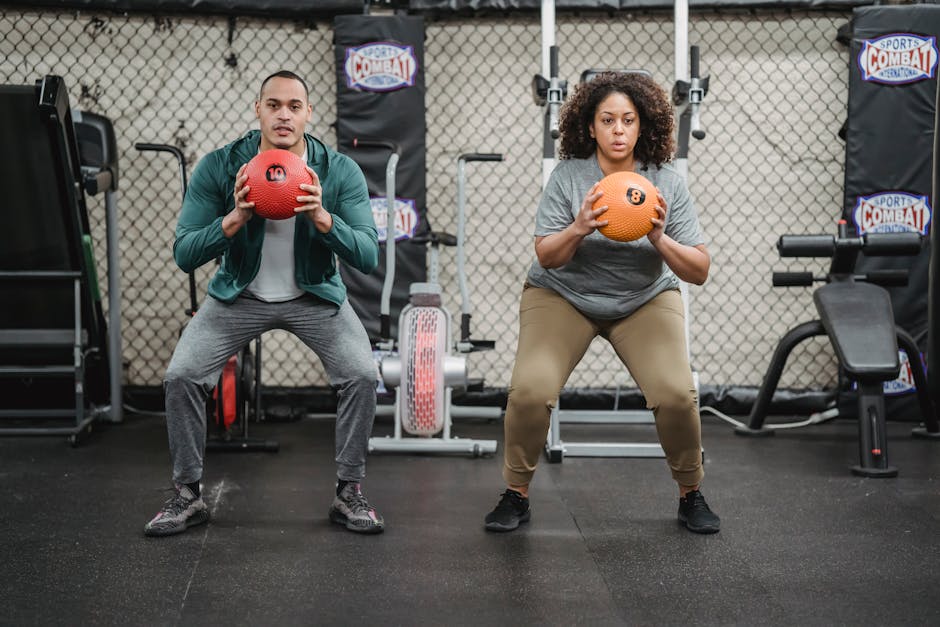
It all begins with client assessment, evaluating fitness levels, posture, and movement patterns to identify imbalances or injury risks. This data informs the program design, where science meets art to create individualized exercise programs custom to a client’s goals, age, and ability. A good program is never one-size-fits-all. Many programs emphasize the importance of functional training, focusing on movements that prepare the body for real-world activities.
Motivation and accountability are crucial. A trainer provides encouragement, celebrates small victories, and holds clients accountable to their commitments. Perhaps most importantly, safety and technique are paramount. A skilled instructor demonstrates proper form, corrects dangerous movements, and explains the “why” behind each exercise to prevent injury.
Work environments are diverse. About 55% of trainers work in fitness centers like our clubs in Lakeland and Winter Haven. Others travel to client homes, work in corporate wellness programs, or become self-employed, with about 14% running their own businesses.
Key Skills for a Successful Personal Fitness Instructor
Beyond technical knowledge, personal skills are what make a trainer great.
- Communication & Listening: Clearly explain exercises and, more importantly, listen to understand a client’s goals, fears, and motivations.
- Empathy: A non-judgmental attitude helps clients build a positive relationship with exercise.
- Problem-solving: Adapt programs and find creative solutions to break through plateaus.
- Physical Fitness: Lead by example and demonstrate exercises with proper form.
- Business Acumen: Essential for self-employed trainers, this includes marketing, scheduling, and financial management.
Successful instructors are also patient, organized, and adaptable to different personalities and situations.
Types of Fitness Instructors
The fitness industry offers multiple career paths.
- Personal Trainers work one-on-one, providing highly customized programs and individualized attention.
- Group fitness classes allow instructors to lead and energize large groups in formats like Zumba, Pilates, or our Power Pump Class. Group settings foster community and accountability.
- Specialized Instructors become experts in a specific modality. Yoga instructors guide poses and breathing, a topic many clients are curious about when they ask why yoga should be part of your fitness routine. Pilates instructors focus on core stability, and Spin instructors lead high-energy cycling classes.
- Virtual Trainers use technology to offer online programs and video coaching, reaching clients anywhere in the world.
Your Roadmap to Certification
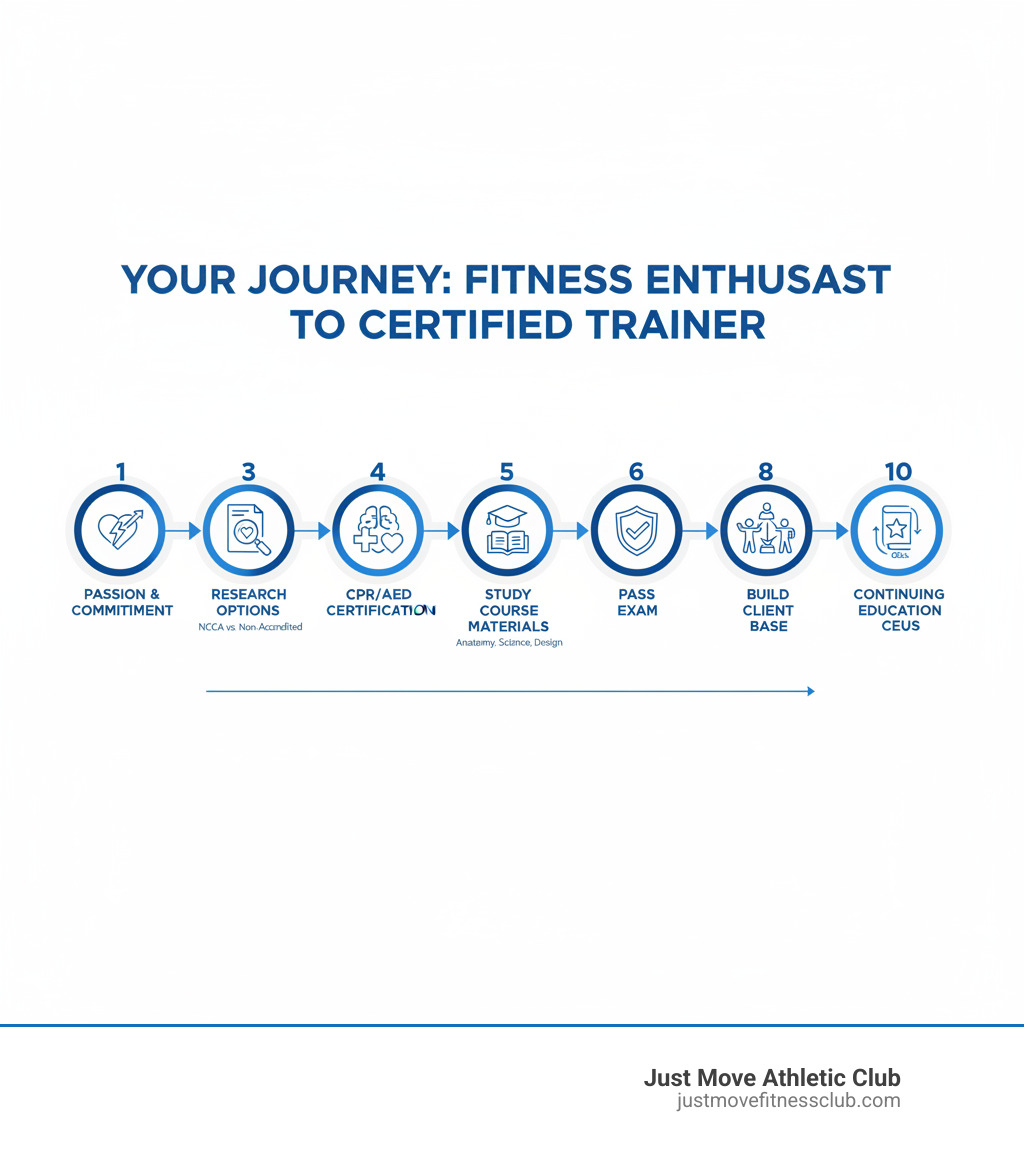
Ready to turn your passion into a profession? The path to becoming a certified personal fitness instructor is a clear, manageable process.
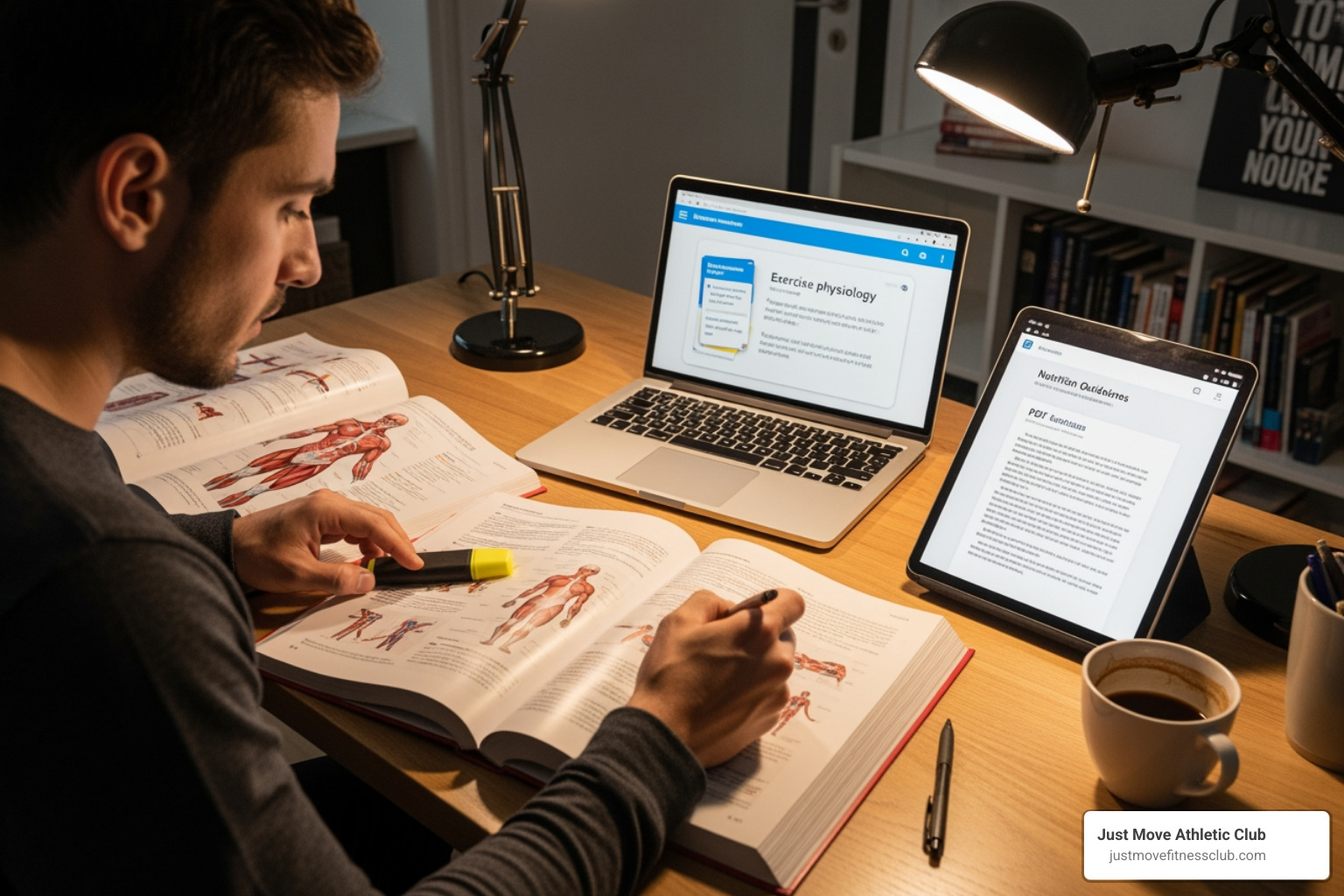
The great news is you don’t need a college degree to start. The typical entry-level requirement is a high school diploma or equivalent. However, one step is non-negotiable: CPR and AED certification. Before you can sit for most certification exams, you must be certified in cardiopulmonary resuscitation (CPR) and automated external defibrillator (AED) use, often including first aid training. Courses are readily available through organizations like the American Heart Association or Red Cross.
With safety certifications in hand, it’s time to choose your certification program. Organizations like the National Academy of Sports Medicine (NASM) and the American Council on Exercise (ACE) are industry leaders. You can find certifications via CareerOneStop to compare your options. Program costs vary, covering study materials and the exam fee. Think of it as an investment that pays for itself quickly, as personal training sessions can range from $55 to over $88 per session.
The Educational Path of a Personal Fitness Instructor
While certification is the entry ticket, many instructors pursue higher education to deepen their expertise. An associate’s or bachelor’s degree in Kinesiology, Exercise Science, or a related field provides a much deeper understanding of biomechanics, physiology, and program design. This advanced knowledge can lead to better client outcomes and more career opportunities. Plus, many certificate programs offer credits that can be applied toward a degree later on.
Regardless of your path, Continuing Education Units (CEUs) are a constant. To maintain your certification, you’ll need to recertify every two years by completing CEUs, ensuring you stay current with the latest fitness science and trends.
NCCA-Accredited vs. Non-Accredited Certifications
When choosing a program, look for one term: “NCCA-accredited.” This is the gold standard in the fitness industry, signifying that the program meets rigorous standards for quality and validity. This accreditation is a signal to employers, including Just Move Athletic Club, that you have a competent level of knowledge.
Here’s a quick comparison:
| Feature | NCCA-Accredited Certification | Non-Accredited Certification |
|---|---|---|
| Credibility | Industry gold standard, recognized for rigorous development and administration processes. | Less recognized by employers and the wider fitness community. May not adhere to strict testing standards. |
| Employer Pref. | Highly preferred and often required by many gyms and health clubs. | May not be accepted by many employers, limiting job opportunities. |
| Exam Rigor | Typically proctored, closed-book, timed, and challenging. Designed to ensure comprehensive knowledge. | Can be open-book, unproctored, and less stringent, potentially allowing individuals to pass without a deep understanding of the material. |
| Cost | Generally higher due to the investment in quality education, exam development, and proctoring. | Often cheaper, but the lower cost may reflect a lower standard of education and recognition. |
| Portability | Widely accepted across different states and by most major fitness organizations. | May not be transferable or recognized outside of specific, niche settings. |
Many gyms in Florida, including our clubs in Lakeland and Winter Haven, require NCCA-accredited certifications. It’s a matter of client safety and professional credibility. An accredited certification is a portable, recognized credential that validates your expertise wherever your career takes you.
A Day in the Life and Career Outlook
What does a day look like for a personal fitness instructor? It’s a dynamic mix of training, planning, and connecting. A typical day might involve early morning client sessions, mid-day program adjustments and administrative tasks, and afternoon group training. If you’re self-employed, you’ll also dedicate time to marketing, such as posting tips on social media. The day is often capped with continuing education, like reading articles or watching webinars to stay current. It’s physically demanding, mentally engaging, and deeply rewarding. For a closer look, you can explore a typical day for a trainer.
Salary Expectations
While passion is the driver, a career in fitness is financially promising. The median annual wage for fitness trainers was $46,180 in May 2024, or about $22.20 per hour. The lowest 10% earned less than $27,580, while the top 10% earned more than $82,050.
Your income is influenced by several factors:
- Experience and Reputation: Seasoned trainers with a proven track record command higher rates.
- Location: Pay scales vary by region, with metro areas often offering higher rates.
- Specialization: Expertise in areas like medical exercise or sports performance can significantly boost earning potential.
- Employment Model: Self-employed trainers may charge $50-$120 per hour but cover their own business expenses, while working for a gym like Just Move Athletic Club offers more stability and administrative support.
The job outlook is excellent. The U.S. Bureau of Labor Statistics projects 12 percent growth from 2024 to 2034, resulting in about 74,200 job openings each year. This growth is fueled by an increased focus on health and wellness across all age groups. You can learn more from the BLS Occupational Outlook Handbook.
Career Paths and Advancement
Becoming a personal fitness instructor is a launchpad, not a final destination. There are numerous paths for advancement:
- Senior Trainer: Mentor new instructors and manage a high-value client roster.
- Fitness Manager: Oversee gym staff, programming, and facility operations.
- Gym Owner: Build your own brand and business from the ground up.
- Corporate Wellness Consultant: Design and implement health programs for companies.
- Online Coach: Build a location-independent business with virtual clients.
Many trainers also pursue specializations to become experts in a niche. Popular areas include strength and muscle building, weight loss programs, youth fitness, and senior fitness. Each specialization requires further education, making you a more valuable and marketable professional.
From Certified Pro to Thriving Business
Your certification is just the beginning. To succeed, you must blend your fitness expertise with business savvy. Building a thriving career as a personal fitness instructor means being a great coach and a smart entrepreneur.
Building Your Client Base
Finding your first clients requires hustle. Start with your existing network: friends, family, and local community members in Lakeland or Winter Haven. Word of mouth is your most powerful tool, so focus on delivering amazing results that get people talking. A strong online presence is also essential. Use social media to share client success stories (with permission), offer valuable tips, and show your personality. Networking with other health professionals like physical therapists and chiropractors can also create a valuable referral stream.
Diversifying Your Services
Don’t limit your income to one service type. While one-on-one training offers deep personalization, it also limits your time. Consider adding:
- Small group training: This makes training more affordable for clients and increases your hourly earning potential. The group dynamic also builds community and motivation.
- Virtual coaching: Expand your reach beyond your local area and offer clients flexibility with online sessions and app-based programming.
Embracing Technology
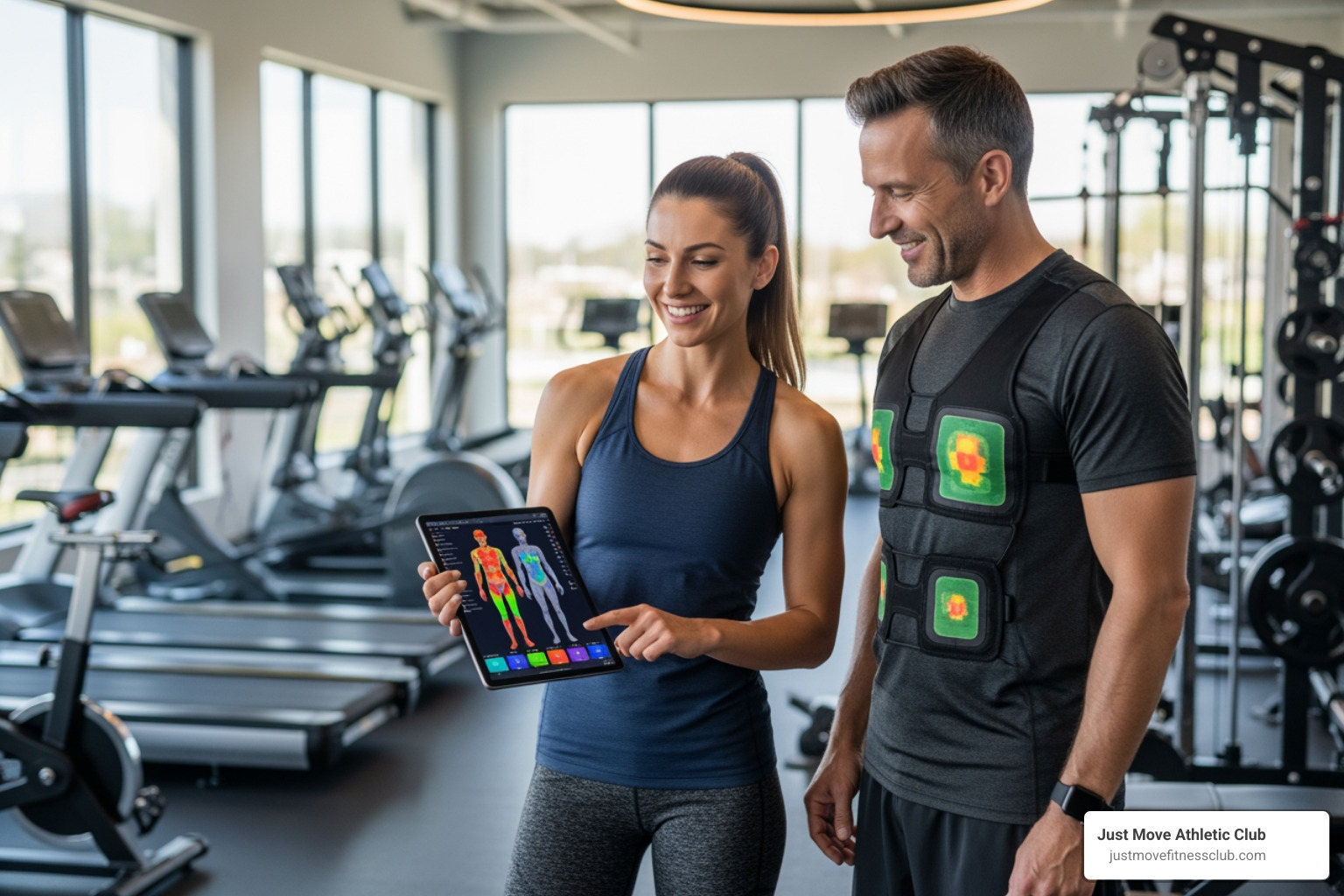
Technology is making trainers more effective, not replacing them. Fitness apps and wearables help track client progress, while online platforms streamline scheduling and payments. At Just Move Athletic Club, we use cutting-edge tools like the Fit3D Pro Body Scanner. This body composition scan technology provides clients with precise, visual data on their progress.
Imagine showing a client a 3D model of their body, comparing it to a previous scan, and highlighting exact changes in muscle gain and fat loss. This data-driven feedback is incredibly motivating and transforms a personalized fitness program from guesswork into trackable science. It’s a powerful tool for proving the value of your work and keeping clients engaged for the long haul.
Frequently Asked Questions about Becoming a Fitness Instructor
Here are straight answers to the most common questions I’ve heard over my 40 years in the fitness industry.
How long does it take to get certified as a personal trainer?
The timeline is flexible and depends on your study habits. With dedicated daily study, you could be ready for the exam in as little as 4 weeks. However, a more common and manageable timeframe for most people is 3 to 6 months. Most certification programs are self-paced and online, allowing you to study when it’s convenient for you. Once you’re ready, you can schedule your exam either online with a proctor or at an in-person testing center.
How much can a personal fitness instructor earn?
This is a career with strong financial potential. According to the Bureau of Labor Statistics, the median annual wage for a personal fitness instructor was $46,180 in May 2024 (about $22.20 per hour). While new trainers may start lower, the top 10% of earners cleared more than $82,050 annually. Your income is influenced by your experience, reputation, location, and any specializations you hold. Self-employed trainers often have higher hourly rates but also cover all business expenses, whereas working for a gym like Just Move Athletic Club provides more stability and a built-in client base.
Do I need a college degree to be a personal trainer?
No, a college degree is not required to become a personal fitness instructor. The standard entry-level requirement is a high school diploma or GED, followed by a professional certification from an NCCA-accredited organization. This certification is what employers and clients look for to validate your expertise.
However, a degree in a related field like Kinesiology or Exercise Science can significantly improve your career. It provides a deeper scientific foundation, which can make you a more effective trainer. A degree is also often preferred or required for advanced roles like fitness director or corporate wellness consultant, and it can lead to higher earning potential over the long term. Many trainers start with a certification and pursue a degree later.
Conclusion: Start Your Journey and Make an Impact
If you’ve read this far, you’re serious about turning your passion for fitness into a meaningful career. Becoming a personal fitness instructor is more than a job—it’s a chance to help people transform their lives.
The fitness industry is growing, with 12 percent job growth projected through 2034 and roughly 74,200 openings each year. The median wage of $46,180 is a solid starting point, but the real reward is seeing a client achieve a goal they once thought was impossible.
Your roadmap is clear: get CPR/AED certified, choose an NCCA-accredited program, pass the exam, and commit to lifelong learning. Whether you envision leading group classes, designing one-on-one programs, or opening your own gym, the path starts now.
At Just Move Athletic Club in Lakeland and Winter Haven, we see the impact of dedicated trainers every day. We empower our team with tools like the Fit3D Pro Body Scanner to deliver incredible results. The world needs more passionate fitness professionals. Someone out there is waiting for you to guide them on their fitness journey and help them create their own personalized fitness program.
Don’t wait. Take the first step today. Your future clients are counting on you.