
Why Building Massive Legs Matters More Than You Think
A huge leg workout requires the right mix of compound exercises, proper programming, and consistent effort. Here’s what you need to build massive legs:
Key Components of a Huge Leg Workout:
- Compound movements first: Back squats, front squats, Romanian deadlifts, and leg press
- Isolation exercises second: Leg extensions, leg curls, and calf raises
- Training frequency: 2-3 times per week with 48 hours recovery between sessions
- Volume: 5-10 sets per muscle group per week for optimal growth
- Rep ranges: 4-6 reps for strength, 8-12 for hypertrophy, 15-20 for endurance
- Progressive overload: Gradually increase weight, reps, or sets over time
Avoiding leg day is a common mistake. Training the largest muscles in your body delivers benefits far beyond aesthetics. A huge leg workout triggers a massive hormonal response, helping build muscle system-wide.
Research shows that compound leg exercises like squats naturally increase testosterone and growth hormone levels. These exercises also burn more calories than upper body movements because they recruit more muscle mass. Plus, strong legs reduce injury risk, improve athletic performance, and make everyday activities like climbing stairs or carrying groceries much easier.
I’m Pleasant Lewis JMAC, founder of Just Move Athletic Clubs with over 40 years in the fitness industry. I’ve seen how a properly structured huge leg workout transforms physiques, health, and confidence. This guide will show you how to build the strong, muscular legs you want.
Why Leg Day Is a Full-Body Game-Changer
Training your legs isn’t just gym humor—it truly changes how your body performs and feels. A huge leg workout builds a foundation that makes your whole body stronger and healthier.
When you work the large muscles in your legs, your metabolism kicks into high gear. You burn a significant number of calories during the workout, and your body continues to burn extra calories for hours afterward as it repairs and rebuilds muscle tissue. It’s a powerful way to boost your overall calorie expenditure.
Beyond metabolism, heavy compound leg exercises like squats and deadlifts trigger the release of anabolic hormones like testosterone and growth hormone. These hormones circulate throughout your body, supporting muscle development everywhere. That’s right—a tough leg day can help you build your chest, back, and arms. Research on squats confirms these exercises have profound benefits for overall health.
For our members in Lakeland and Winter Haven, strong legs are essential for sports and daily life. They power every jump and sprint, translating directly into better athletic performance. Strong leg muscles also act as armor for your knees, hips, and lower back, providing stability that reduces injury risk. Heavy leg training strengthens your core, as you must engage deep stabilizing muscles to perform movements like squats safely.
This is what we call functional strength at Just Move Athletic Club—the kind of strength that makes everyday life easier. When you commit to training your legs, you’re investing in your metabolic health, hormonal balance, and long-term mobility. It’s a full-body game-changer.
The Anatomy of a Huge Leg Workout
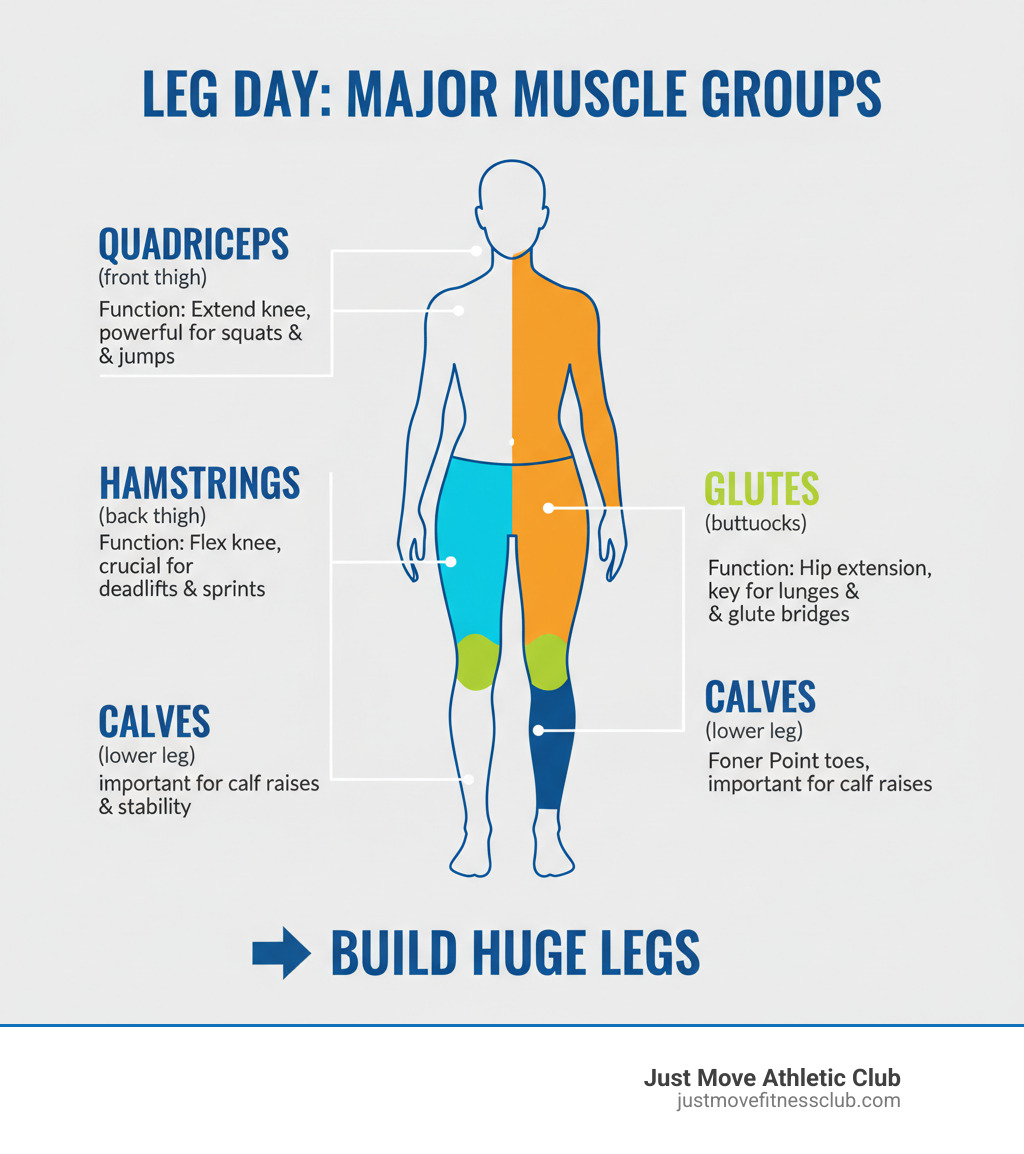
To build massive legs, you need to understand the muscles you’re working. Your legs are complex, and balanced development requires attention to each major muscle group.
- Quadriceps: The four muscles on the front of your thigh that extend your knee. They create the “quad sweep.”
- Hamstrings: The three muscles on the back of your thigh responsible for knee flexion and hip extension. They are your “posterior powerhouse.”
- Glutes: The gluteus maximus, medius, and minimus are among the most powerful muscles in your body, driving hip extension, abduction, and rotation.
- Calves: The gastrocnemius and soleus at the bottom of your leg handle pointing your toes (plantar flexion).
- Adductors & Abductors: These inner and outer thigh muscles provide stability and prevent injury.
An effective strategy combines compound exercises and isolation exercises. Compound movements like squats and deadlifts recruit multiple muscle groups, allowing you to lift heavy, build overall mass, and trigger a powerful hormonal response. They are the foundation of your workout.
Isolation exercises like leg extensions and leg curls target specific muscles. They are perfect for refining shape and ensuring no muscle group is left behind. The best approach is to start your workout with heavy compound lifts while you’re fresh, and finish with isolation exercises to target specific areas and achieve a full muscle pump. This combination is the secret to a truly huge leg workout.
| Feature | Compound Exercises | Isolation Exercises |
|---|---|---|
| Benefits | Builds overall size, strength, power, hormonal boost | Targets specific muscles, refines shape, improves mind-muscle connection |
| Examples | Squats, Deadlifts, Lunges, Leg Press | Leg Extensions, Leg Curls, Calf Raises, Hip Abductions |
| When to Use | Early in workout, for strength/mass building | Later in workout, for muscle detail and fatigue |
For more on structuring your training, check out our Gym Program for Fast Muscle Growth.
The 10 Best Exercises for Building Massive Legs
Building massive legs requires choosing the right movements and performing them in a strategic order. Start your huge leg workout with heavy compound lifts when you’re fresh, then move to isolation exercises to exhaust specific muscle groups.
Proper form always trumps heavy weight. Poor form increases injury risk and shifts the work to the wrong muscles, defeating the purpose of the exercise. If you’re unsure about your technique, our certified trainers at Just Move Athletic Club are here to help. For more safety tips, see our guide on How to Avoid Common Workout Mistakes That Could Lead to Injury.
Here are the ten most effective exercises for building massive legs.
For Quadriceps (The “Quad Sweep”)
These exercises hammer the four muscles on the front of your thigh, giving them a powerful, impressive sweep.

- The Barbell Back Squat: The king of exercises, building overall leg and core strength. Place the bar on your upper back, keep your chest up, and push your hips back to descend. Aim for a depth where your hips are at or below your knees. Avoid rounding your back or letting your knees cave in.
- The Front Squat: This variation puts more emphasis on the quads and less stress on the lower back. Hold the bar across your front shoulders with elbows high to maintain an upright torso. Research shows it activates muscles differently than a back squat, making both valuable.
- The Leg Press: Allows you to move significant weight with less spinal compression. Position your feet shoulder-width apart and lower the platform until your knees are near your chest. Push forcefully but avoid locking your knees at the top.
- The Hack Squat: A stable, guided movement that isolates the quads. Keep your back pressed firmly against the pad and descend slowly before driving back up.
- The Goblet Squat: An excellent accessory movement. Holding a dumbbell or kettlebell at your chest helps you maintain an upright torso and achieve a deep squat.
For Hamstrings (The “Posterior Powerhouse”)
Strong hamstrings are crucial for athletic performance, injury prevention, and balanced leg development.
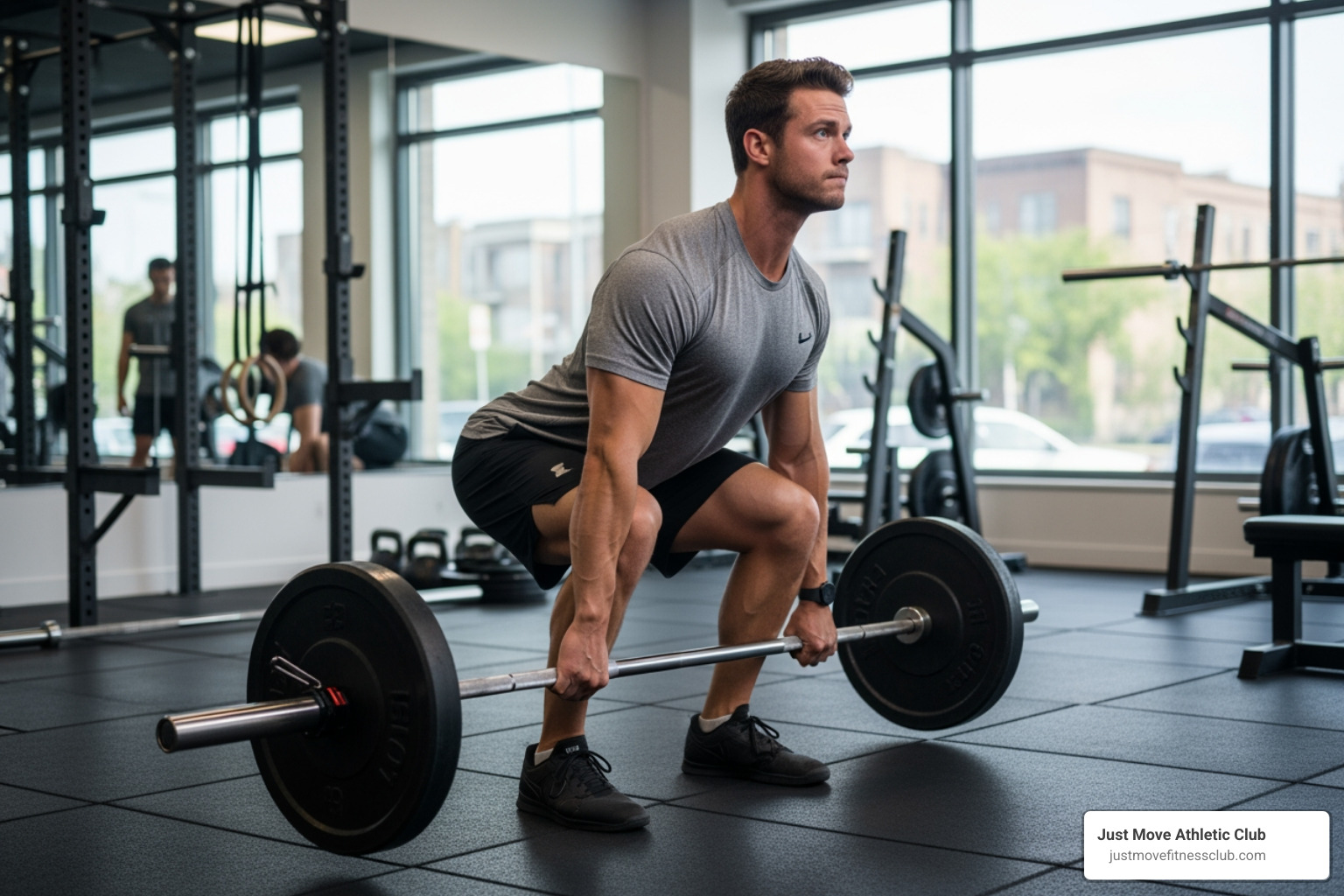
- The Romanian Deadlift (RDL): The best exercise for targeting hamstrings and glutes. With a slight bend in your knees, hinge at your hips by pushing your glutes back. Keep your back straight and feel the stretch in your hamstrings. Avoid rounding your lower back.
- The Seated Leg Curl: This machine isolates the hamstrings. Research shows seated curls are highly effective for muscle growth because they work the muscle at a long length. Control the movement on the way up and down.
- The Lying Leg Curl: Another great isolation exercise. Lie face down and curl your legs toward your glutes, squeezing hard at the top.
- Good Mornings: A challenging exercise for the entire posterior chain. With a light barbell on your back, hinge at the hips while keeping your back straight. Squeeze your glutes to return to the start.
For more on building a complete program, see our Strength and Muscle Building Workout Plan.
For Glutes & Unilateral Strength
Your glutes are your lower body’s powerhouse. Unilateral (single-leg) exercises are critical for correcting imbalances and building functional strength.
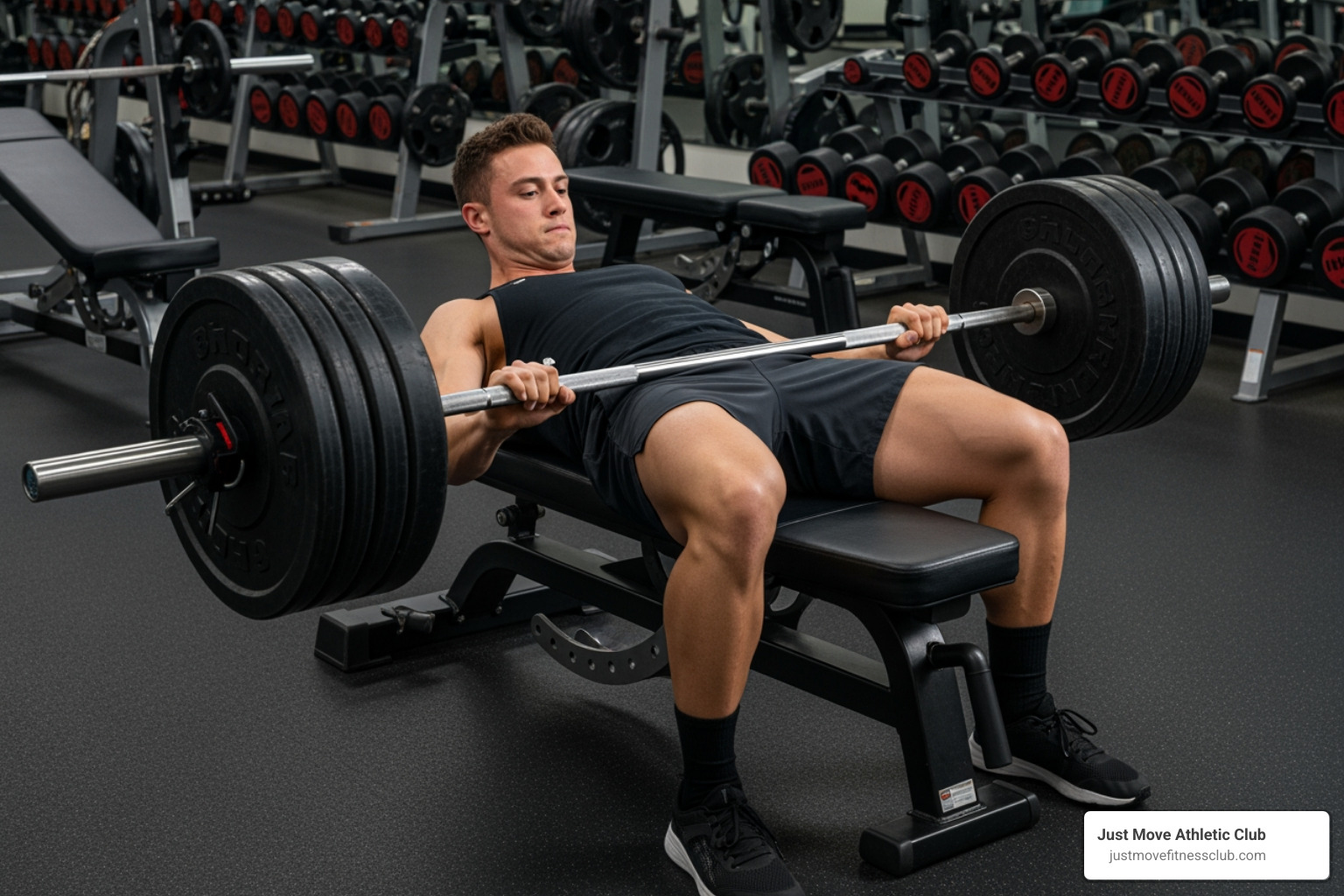
- The Barbell Hip Thrust: The king of glute exercises. Studies confirm it activates the glutes more than squats. With your upper back on a bench, drive your hips toward the ceiling and squeeze your glutes hard at the top.
- The Bulgarian Split Squat: A brutal but effective unilateral movement for quads and glutes. Place one foot on a bench behind you and descend into a lunge, keeping your torso upright. Research shows it’s superior for improving athletic ability.
- Dumbbell Lunges: Fantastic for building symmetrical mass. Step forward and lower your hips until both knees are at 90-degree angles. Keep your front knee over your ankle.
- The Glute Bridge: An excellent glute activation exercise. Lie on your back and drive through your heels to lift your hips, squeezing your glutes at the top.
For Calves (The “Finishing Touch”)
Well-developed calves complete the look of a powerful lower body.
- The Standing Calf Raise: Primarily targets the gastrocnemius, the larger, visible calf muscle. Studies show this variation is best for calf size. Stand on a raised platform, lower your heels for a deep stretch, then push up and squeeze.
- The Seated Calf Raise: Shifts the emphasis to the soleus, the muscle underneath the gastrocnemius. Sit with knees at 90 degrees, lower your heels for a stretch, then raise them up.
Programming Your Ultimate Leg Day
Effective programming aligns your workout with your goals, whether that’s strength, size, or endurance. At Just Move Athletic Club, we believe in tailoring workouts to individual needs, and a personalized fitness program is a great way to achieve this.
Building Your Huge Leg Workout Routine
To structure your huge leg workout, you need to manipulate key variables:
- Volume: For muscle growth (hypertrophy), aim for 5 to 10 working sets per muscle group per week. This is the sweet spot for stimulating growth without overtraining.
- Rep Ranges: Match your reps to your goal. For strength, use the 4-6 rep range. For hypertrophy, the classic 8-12 rep range is ideal. For endurance, aim for 15-20+ reps.
- Rest Periods: For strength, rest 3-5 minutes. For hypertrophy, rest 60-120 seconds to maintain metabolic stress. For endurance, keep rest short at 30-60 seconds.
While you don’t always need to train to absolute failure, evidence suggests that training close to failure is highly effective for hypertrophy. Those last few challenging reps are where growth happens.
Progressive Overload: The Key to a Huge Leg Workout
Your muscles won’t grow unless you consistently challenge them. This is the principle of progressive overload. Here’s how to apply it:
- Increase the weight: The most common method. Once you hit your rep target, add a little more weight.
- Increase your reps/sets: Aim for one more rep or add an extra set to increase total volume.
- Improve your form: Better technique engages the target muscles more effectively.
- Decrease rest periods: Increases workout density and metabolic stress.
Track your workouts in a notebook or app. This ensures you’re always striving to beat your previous performance. For more strategies, check out our guide on how to increase strength in gym.
How Often Should You Train Legs?
For optimal growth, most people should train legs 2-3 times per week. A good rule of thumb is the 48-hour rule: allow your muscles about 48 hours to recover before training them again. If you have a heavy leg session on Monday, wait until at least Wednesday for the next one. Most importantly, listen to your body. If you’re still sore or your performance is down, take an extra rest day. Recovery is when your muscles grow.
Bodyweight-Only Leg Workout Options
You can still get a huge leg workout without weights. These exercises are great for building foundational strength and endurance.
- Foundation: Bodyweight squats, lunges (forward, reverse, walking), and glute bridges.
- Advanced: Assisted pistol squats (single-leg squats), using a TRX or sturdy object for support.
- Plyometrics: For explosive power, try box jumps (focus on soft landings) and jump squats.
These options are surprisingly effective. Our beginner body weight program provides a great starting point.
Fuel, Warm-Up, and Recover Like a Pro
Your huge leg workout isn’t just the time you spend in the gym. What you do before and after is just as critical for progress and injury prevention.
The Perfect Leg Day Warm-Up
Never skip your warm-up. A good warm-up increases blood flow, raises your core temperature, and prepares your nervous system for heavy lifting.
- Light Cardio (5-10 mins): Start with cycling, an incline walk, or the elliptical to get your heart rate up.
- Dynamic Stretches: Move your joints through their full range of motion. Try leg swings (forward/backward and side-to-side) for hip mobility.
- Activation: Perform 10-15 controlled bodyweight squats to rehearse the movement pattern. Add glute activation exercises like banded lateral walks or donkey kicks to wake up your glutes.
Essential Cool-Down Stretches
A cool-down helps your body transition from work to recovery mode, which can reduce soreness.
- Light Cardio (5-10 mins): A slow walk on the treadmill helps bring your heart rate down gradually.
- Static Stretches: Hold each stretch for 30 seconds to release tension. Focus on the hamstring stretch, quad stretch, figure-four glute stretch, and calf stretch (with both a straight and bent leg).
- Foam Rolling: Consider rolling out your quads, hamstrings, and glutes to improve recovery.
Nutrition and Supplements for Leg Growth
Your training program is only as good as your nutrition. Muscles grow when you rest and feed them properly.
- Calories & Protein: To build muscle, you need a slight caloric surplus and adequate protein. Aim for at least one gram of protein per pound of body weight daily to provide the building blocks for muscle repair.
- Carbohydrates: Carbs are your body’s primary fuel for intense training. Eat a carb-rich meal before your workout for energy and after to replenish glycogen stores.
- Supplements: While not magic, some supplements can help. Protein powder makes it easier to hit your protein goals. Creatine monohydrate is proven to boost strength and work capacity. A quality pre-workout can improve energy and focus. For more details, read our articles on Pre-Workout Nutrition and The Role of Nutrition in Your Workout Routine.
For evidence-based recommendations, refer to resources like this research on nutrition and athletic performance.
Frequently Asked Questions about Leg Training
At Just Move Athletic Club, we get a lot of questions about leg training. Here are answers to some of the most common ones.
What is the single most effective leg exercise?
If forced to choose just one, it would be the Barbell Back Squat. It’s a compound movement that recruits nearly every muscle in your lower body and triggers a powerful hormonal response for growth. However, the “best” exercise depends on your goals. For overall mass, squats and deadlifts are top-tier. For targeted glute growth, the hip thrust is superior. A well-rounded program will include several key movements.
How long should a leg workout be?
An effective leg workout typically lasts between 60 and 90 minutes. This allows for a proper warm-up, enough training volume, and adequate rest between sets. Beginners can start with shorter 45-60 minute sessions to focus on form. A focused, intense 60-minute session is better than a wandering 2-hour marathon. Quality always trumps quantity.
Can I build big legs without squats?
Yes, absolutely. While squats are fantastic, they aren’t mandatory for building impressive legs. You can create a huge leg workout with excellent alternatives. The leg press and hack squat allow you to use heavy weight to target the quads. Romanian deadlifts are essential for hamstrings and glutes. Unilateral movements like Bulgarian split squats and lunges are phenomenal for building balanced muscle. The key is applying progressive overload—consistently challenging your muscles over time.
Conclusion
You now have a complete guide to structuring a huge leg workout. The journey to powerful legs is a marathon, not a sprint, rewarding consistency and hard work.
We’ve covered why leg day is a full-body game-changer, the anatomy of your lower body, the 10 best exercises, and how to program, fuel, and recover for optimal results. The core principles are simple but fundamental:
- Consistency: Show up even when you don’t feel like it.
- Proper Form: Prioritize technique over ego.
- Progressive Overload: Always strive to do a little more than last time.
- Fuel and Recovery: Muscles grow when you’re resting and eating, not just when you’re lifting.
Here at Just Move Athletic Club in Lakeland and Winter Haven, our facilities have all the equipment you need to perform every exercise in this guide. If you need help with form or a custom program, our expert trainers are here for you. Building the powerful legs you want is within your reach. Every rep brings you one step closer.
Don’t just tolerate leg day—make it the highlight of your week. Your future self will thank you.