
Why a Full Body Elastic Band Workout Changes Everything
A full body elastic band workout delivers effective strength training using simple, portable equipment. Here’s what you need to know:
Quick Start Guide:
- Equipment needed: One or two resistance bands (loop or tube style)
- Time required: 20-30 minutes
- Frequency: 2-3 times per week
- Key exercises: Squats, rows, chest press, overhead press, deadlifts, and pull-aparts
- Results: Build muscle, improve strength, and burn calories anywhere
If finding time for fitness is your biggest challenge, you’re not alone. What if you could get real muscle-building results with equipment that fits in your desk drawer?
Research confirms this is possible. Studies show that resistance band training produces similar strength gains to free weights and machines. A 2022 review even found that bands improved body fat in overweight individuals better than other resistance training types.
Resistance bands work by creating constant tension on your muscles. Unlike free weights, which rely on gravity, bands challenge you through the entire movement. They’re also joint-friendly, making them ideal for all fitness levels.
The best part is working every major muscle group—chest, back, shoulders, arms, legs, and core—in under 30 minutes, right from the comfort of your own space.
I’m Pleasant Lewis, founder of Just Move Athletic Clubs with over 40 years in the fitness industry. I’ve seen how a well-designed full body elastic band workout helps busy adults build consistent fitness habits. Whether you’re starting out or maintaining strength while traveling, resistance bands offer a practical solution for real results.
Why Resistance Bands Are Your Ultimate Fitness Tool
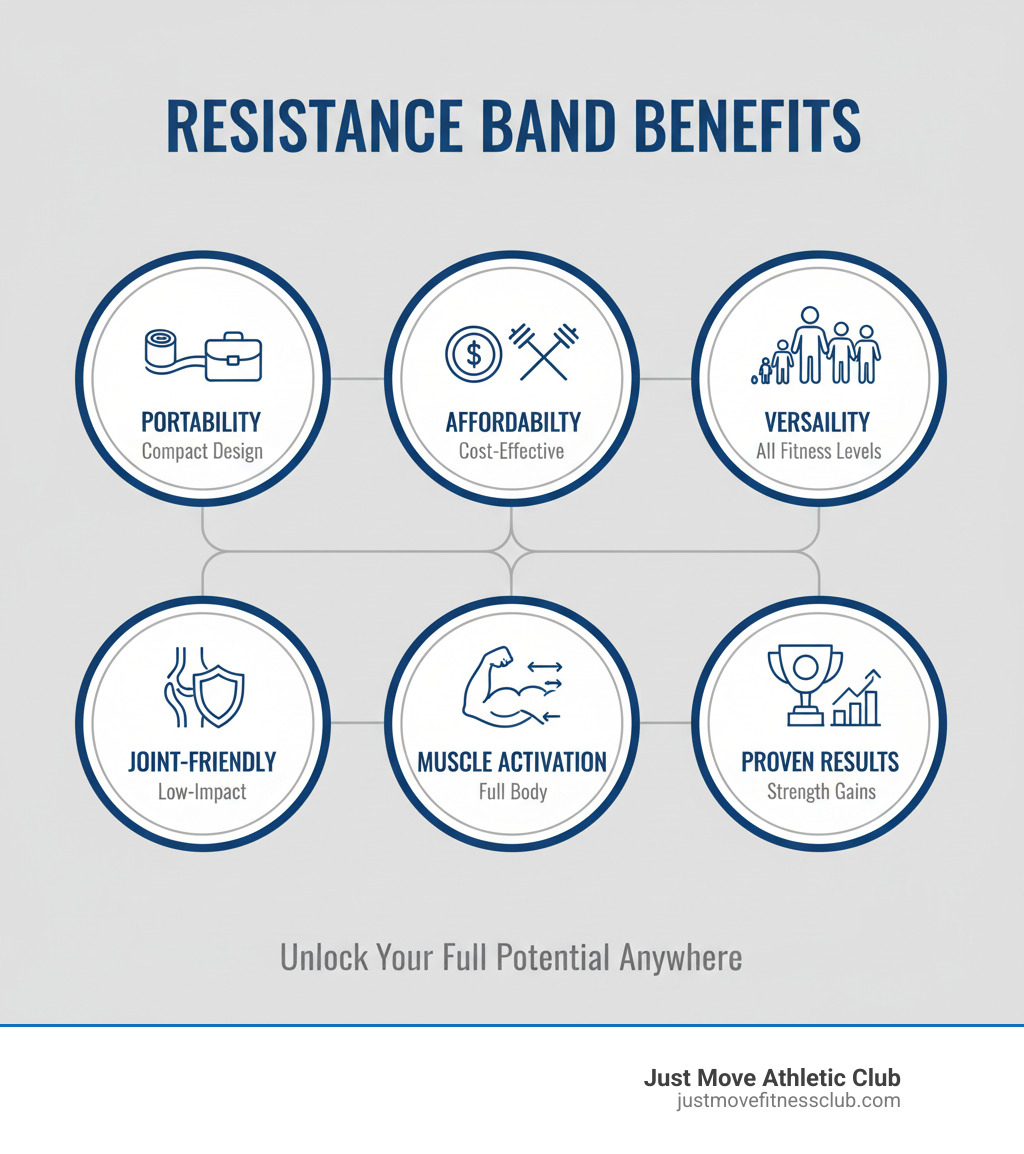
Resistance bands are one of the most effective tools for a full body elastic band workout. They are versatile, affordable, portable, and joint-friendly.
- Versatility: Target every muscle group, from large muscles in your legs to smaller stabilizer muscles.
- Affordability: A quality set is a one-time purchase that lasts for years, making it a cost-effective fitness solution.
- Portability: Bands fit in any bag, allowing you to work out in a hotel room, park, or office.
- Variable Resistance: Unlike fixed weights, bands get progressively harder as you stretch them. This challenges your muscles through the entire range of motion and engages stabilizer muscles for better strength development.
- Joint-Friendly: The smooth, accommodating resistance is low-impact, making bands perfect for beginners, those returning to fitness, or anyone managing joint concerns.
Science confirms their effectiveness. A 2019 review in SAGE Open Medicine found that elastic resistance training produces similar strength gains to conventional training. Furthermore, a 2022 review in Frontiers in Physiology showed that resistance band training improved body fat in overweight individuals more effectively than other resistance training types.
Bands are also ideal for Functional Fitness: How to Train for Real Life, strengthening you for everyday activities like lifting groceries or playing with kids.
Choosing Your Weapon: Types of Resistance Bands
Understanding the different types helps you pick the right tools for your full body elastic band workout.
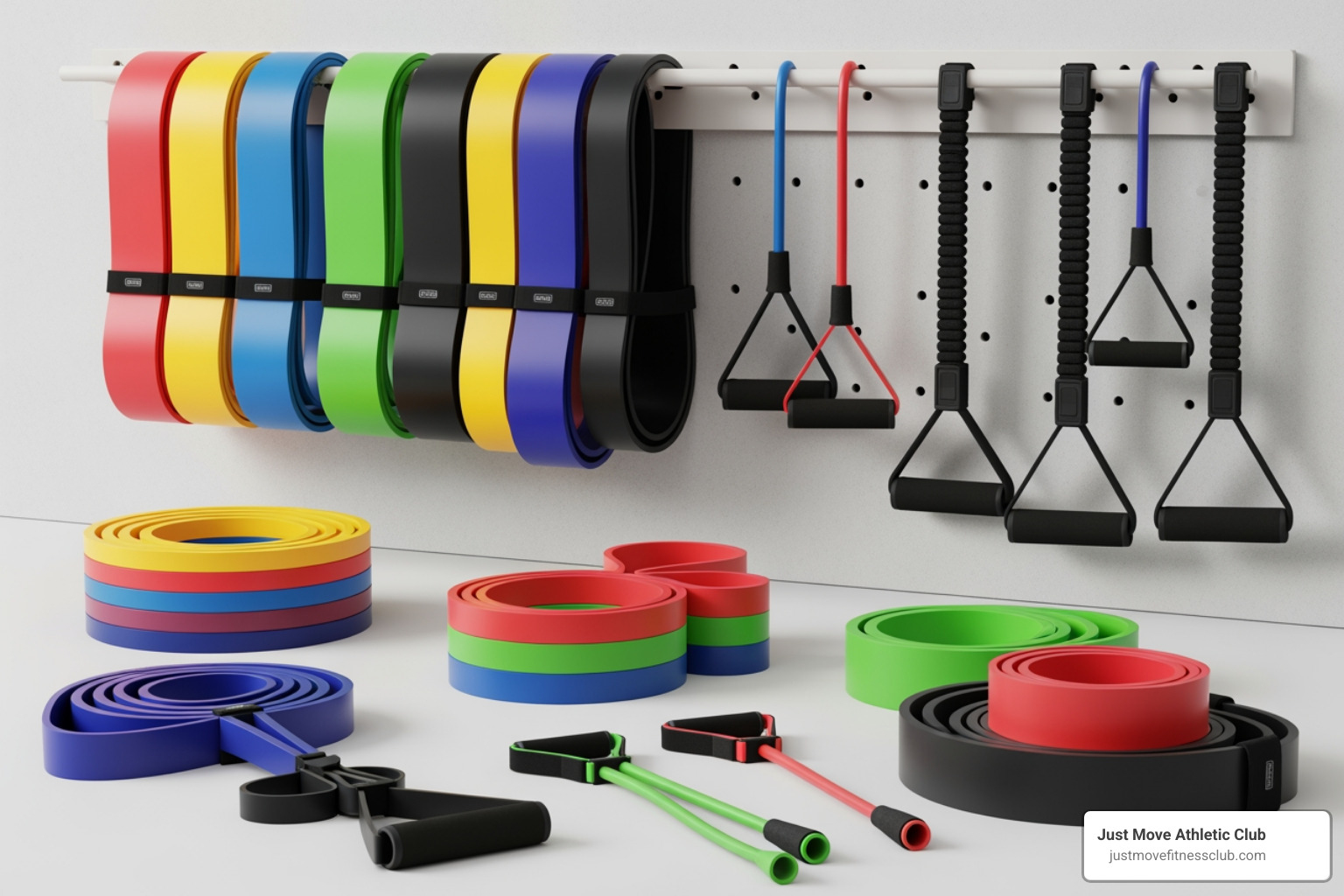
- Loop Bands (Power Bands): These continuous circles of rubber are versatile for compound movements like squats and deadlifts, pull-up assistance, and stretching. Thicker bands provide more resistance.
- Tube Bands with Handles: Popular for full-body workouts, these mimic cable machine exercises like chest presses and rows. The handles offer a secure grip, and they can be anchored to doors.
- Mini Bands (Booty Bands): These small loops are champions for lower body and glute activation. Used around the thighs or ankles, they add significant challenge to exercises like glute bridges and lateral walks.
| Band Type | Best For | Pros | Cons |
|---|---|---|---|
| Loop Bands (Power Bands) | Compound movements (squats, deadlifts), pull-up assistance, stretching, heavy resistance training | Wide range of resistance levels; extremely versatile for full-body work; durable; great for progressive overload | Can pinch skin or slip during some exercises; may be intimidating for beginners with heavier resistances |
| Tube Bands with Handles | Full-body workouts, upper body exercises (chest presses, rows, curls, triceps extensions), door-anchored movements | Comfortable handles provide secure grip; easy to anchor; most popular for comprehensive workouts; feels similar to cable machines | Can be bulky with multiple resistance levels; handles may break over time; less versatile for some lower body activation work |
| Mini Bands (Booty Bands) | Lower body activation, glute exercises, hip stability, lateral movements, warmups, rehab work | Excellent for targeting hip and glute muscles; highly portable; adds challenge to bodyweight movements; perfect for activation work | Limited upper body applications; can roll or pinch skin if not quality fabric; smaller range of resistance options |
For a comprehensive workout, we recommend a set of loop bands and mini bands. Tube bands are great for replicating cable machine exercises.
Key Muscle Groups Targeted
A balanced full body elastic band workout hits every major muscle group.
- Upper Body: Build your chest with presses, strengthen your back with rows and pull-aparts for better posture, develop your shoulders with overhead presses, and sculpt your arms with curls and extensions.
- Lower Body: Bands excel here. Build strong glutes with squats and bridges, work your hamstrings with deadlifts, and fire up your quads with lunges.
- Core: Your abs and obliques are engaged for stability in most exercises but can be targeted directly with movements like wood choppers and banded crunches.
Band training forces your stabilizer muscles to work harder, building balanced, functional strength that mirrors the principles of our Full Body Workout Routine: Muscle and Strength programs.
The Ultimate Full Body Elastic Band Workout Routine
A well-structured full body elastic band workout is about strategic muscle engagement. This routine is your blueprint for How to Build a Balanced Workout Routine that you can do anywhere.
Workout Plan:
- Sets: 3 per exercise
- Reps: 10-15 per set (the last few should be challenging)
- Rest: 30-60 seconds between sets
Proper form trumps everything. Focus on controlled movements over speed or resistance. Start with a lighter band to master the technique before progressing.
Pre-Workout Prep: Warm-Up Essentials
Never skip your warm-up. A 5-10 minute dynamic warm-up increases blood flow and reduces injury risk. Save static stretches for your cool-down.
- Arm Swings & Scapula Circles: 10-15 reps forward and backward to prepare your shoulders.
- Hip Circles: 10-15 circles per leg to improve hip mobility for squats and lunges.
- Air Squats: 10-15 bodyweight reps focusing on good form.
- Torso Twists: 10-15 twists per side to activate your core and spine.
For a visual guide, check out this Warm Up video.
Effective full body elastic band exercises for beginners
This routine targets every major muscle group with beginner-friendly movements. Aim for 3 sets of 10-15 reps.
- Banded Squats: Stand on a loop band with ends at your shoulders, or place a mini band above your knees. Lower your hips as if sitting in a chair, keeping your chest up. Push through your heels to stand. This targets glutes, quads, and hamstrings. See a Sumo Squat example.
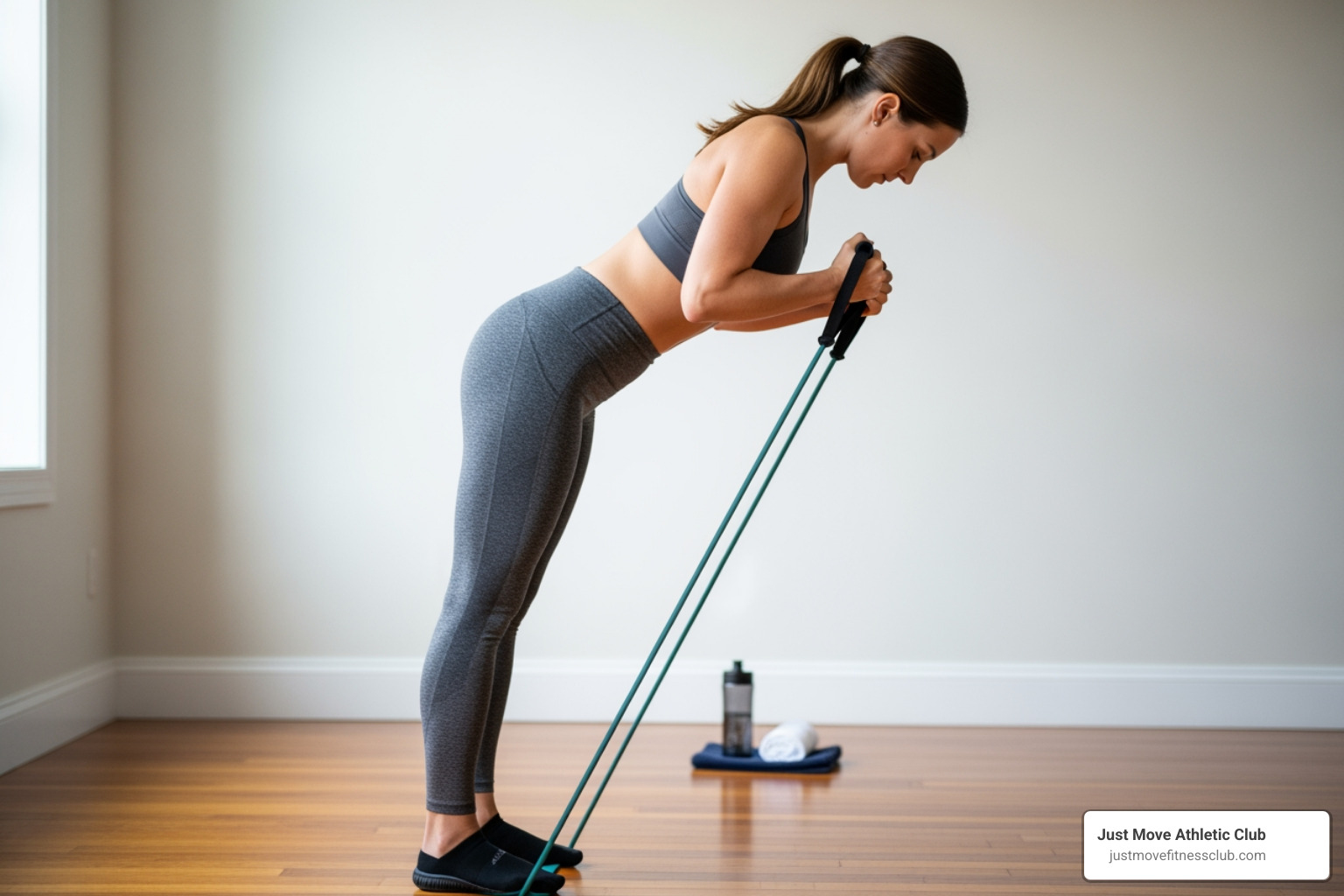
- Bent-Over Rows: Stand on a loop band, feet hip-width apart. Hinge at your hips with a straight back. Pull the band toward your chest, squeezing your shoulder blades together. This works your back and biceps.
- Standing Chest Press: Anchor a band at chest height. Facing away, step forward to create tension and press the band straight out from your chest. This targets your chest, shoulders, and triceps.
- Banded Good Mornings: Stand on a loop band with the other end over your shoulders. Hinge at your hips with a flat back, pushing them back until you feel a stretch in your hamstrings. Return to standing. This works your hamstrings and glutes.
- Overhead Press: Stand on a loop band, holding the ends at shoulder height. Press the band straight overhead until your arms are fully extended. This builds strong shoulders.
- Band Pull-Aparts: Hold a light band in front of you with straight arms. Pull the band apart until it touches your chest, squeezing your shoulder blades. See this Pull-Apart example.
- Glute Bridges: Lie on your back with a mini band above your knees. Drive through your heels to lift your hips, squeezing your glutes at the top. This isolates your glutes and hamstrings.
This routine is a great starting point, aligning with our principles for a Beginner Workout for Muscle Growth.
Post-Workout Recovery: Cool-Down Stretches
A cool-down helps your body recover and improves flexibility. Hold each stretch for 20-30 seconds without bouncing.
- Hamstring Stretch: Sit on the floor, extend one leg, and reach for your toes.
- Quad Stretch: Standing, pull your heel toward your glute.
- Chest Stretch: Use a doorway to stretch your chest and the front of your shoulder.
- Upper Back Stretch: Interlace your fingers and push your palms away, rounding your upper back.
- Triceps Stretch: Reach one arm overhead, bend the elbow, and use the other hand to gently deepen the stretch.
Flexibility work is crucial for recovery, which is why we often suggest that Why Yoga Should Be Part of Your Fitness Routine.
Building Momentum: Scheduling and Progression
Consistency is the key to results with your full body elastic band workout. A balanced approach of regular workouts, progressive challenges, and adequate recovery is central to effective Fitness Goal Setting.
How to progress your full body elastic band workout
To keep getting stronger, you must apply progressive overload—making your muscles work harder over time. Here’s how to do it with bands:
- Increase Resistance: Move to a thicker band, shorten your current band by gripping it differently, or use two bands at once.
- Add Reps or Sets: Once you can comfortably complete your target reps, add a few more reps or an entire extra set.
- Slow Down Your Tempo: Increase time under tension by taking 3-4 seconds on the lowering phase of each rep. This is a powerful stimulus for muscle growth.
- Reduce Rest Periods: Cut rest time between sets from 60 seconds to 45 or 30 to increase intensity.
- Try Advanced Variations: As you get stronger, explore single-leg or single-arm versions of exercises.
Always prioritize form over difficulty. The principles in our guide to Increasing Your Strength apply perfectly to band training.
Creating Your Weekly Routine
Aim for 2-3 full-body sessions per week on non-consecutive days. This schedule provides enough stimulus for growth while allowing for recovery. A sample week could be workouts on Monday, Wednesday, and Friday, with active recovery days in between.
Active recovery days involve light movement like walking or stretching to promote blood flow and reduce soreness. Always listen to your body; if you feel run down, take an extra rest day. For more on scheduling, see our Best Weekly Workout Routine for Weight Loss.
Safety First: Avoiding Common Mistakes
While bands are safe, a few precautions are essential for an injury-free full body elastic band workout.
- Inspect Bands: Before every use, check for nicks, tears, or wear. A damaged band can snap.
- Secure Anchors: Ensure any anchor point (like a door) is sturdy and won’t slip.
- Control the Movement: Don’t let the band snap back. The lowering phase of an exercise is crucial for building strength.
- Prioritize Form: Maintain good posture and a braced core. If your form breaks down, reduce the resistance.
- Choose Appropriate Resistance: Start with a band that allows you to complete 10-15 reps with good form.
Following these tips is critical for long-term success. Learn more about How to Avoid Common Workout Mistakes That Could Lead to Injury.
Frequently Asked Questions about Elastic Band Workouts
Here are answers to common questions about using resistance bands for a full body elastic band workout.
Can you build muscle with just resistance bands?
Absolutely, yes. Muscle growth occurs in response to mechanical tension and progressive overload. Resistance bands provide this stimulus effectively. As long as you consistently challenge your muscles by increasing resistance, reps, or time under tension, you will build strength and muscle. In fact, a 2019 study in SAGE Open Medicine confirmed that elastic resistance training is able to promote similar strength gains to conventional resistance training.
How long should a resistance band workout be?
An effective full body elastic band workout typically lasts 20-45 minutes, including a warm-up and cool-down. Even a focused 20-minute session is highly effective if performed consistently. A consistent routine of shorter workouts delivers better results than sporadic, longer sessions.
What are the disadvantages of resistance bands?
While bands are excellent tools, they have a few limitations:
- Limited Maximal Resistance: For elite powerlifters aiming to max out their one-rep lifts, bands may not provide enough top-end resistance compared to a loaded barbell.
- Potential to Snap: Bands can break if they are old, damaged, or used improperly. Regular inspection is crucial to avoid this.
- Learning Curve: The variable resistance requires more focus on stability and control, which can be a new challenge for beginners.
- Less Precise Load Measurement: It’s harder to quantify the exact weight you’re lifting compared to dumbbells, making progress tracking slightly more subjective.
Despite these points, the overwhelming benefits of affordability, portability, and effectiveness make bands an outstanding choice for most fitness goals.
Take Your Fitness Anywhere
You now have a complete roadmap for a full body elastic band workout. These simple tools deliver incredible versatility and effectiveness, allowing you to build strength and sculpt your body anywhere. Their portability means your fitness routine never has to pause, whether you’re at home, traveling, or at the office.
The exercises covered here provide everything you need to start today. The most important thing is to just move.
At Just Move Athletic Club, we believe in making fitness fit your life. If you’re ready to take the next step, our expert trainers can create a Personalized Fitness Program custom to your goals. We combine proven methods with technology like our Fit3D Pro Body Scanner to help you track real progress in Lakeland, Winter Haven, and beyond.
Visit us at https://justmovefitnessclub.com/ to explore how we can help you build the healthy, active lifestyle you deserve.