
Why a Structured Weekly Routine Is Your Best Tool for Weight Loss
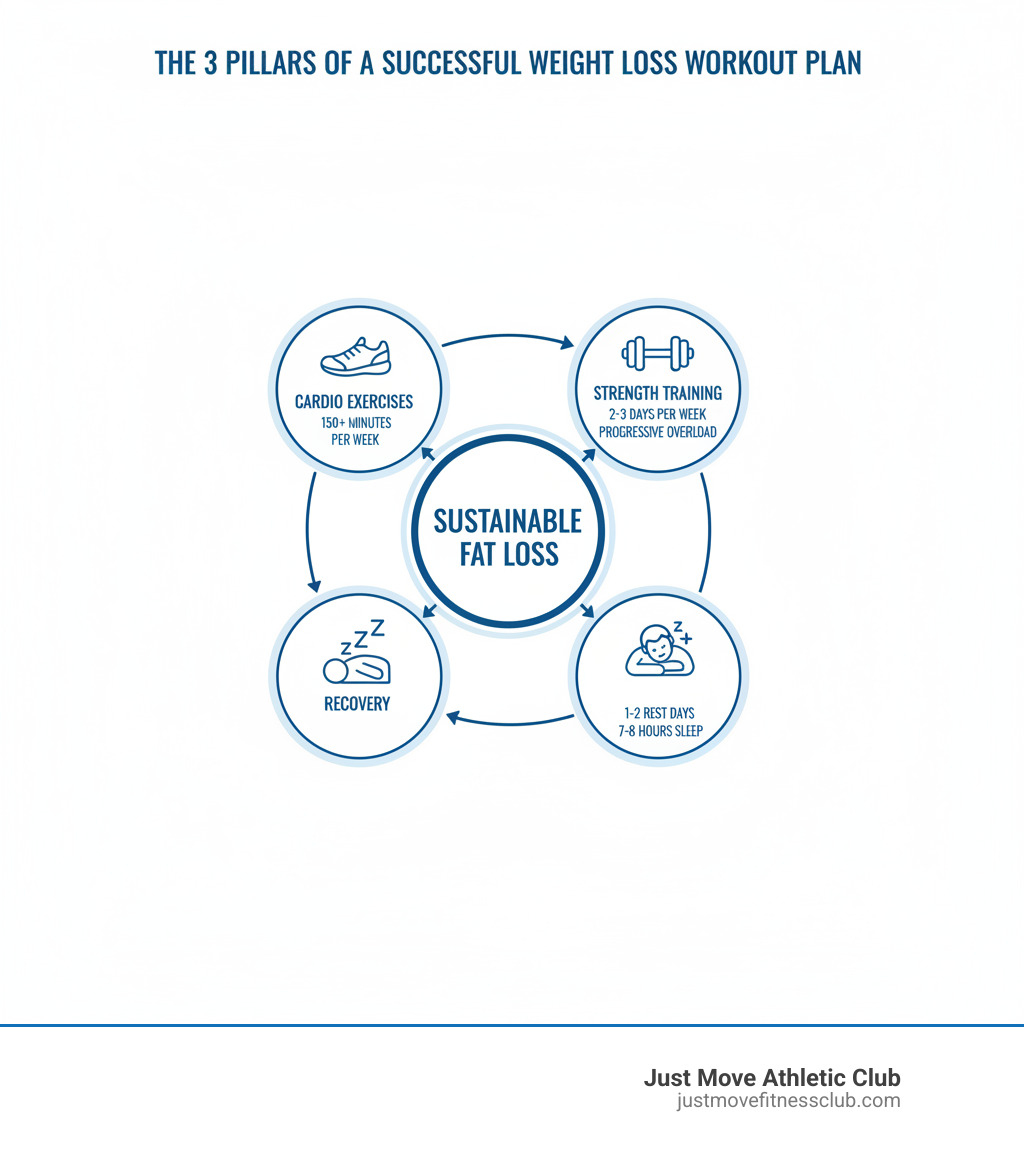
The best weekly workout routine for weight loss combines 150 minutes of cardio with at least 2 days of strength training, spread across 4-5 workout days per week for sustainable results.
Quick Answer: Your Ideal Weekly Structure
- Cardio Sessions: 2-3 days (HIIT or steady-state, 20-45 minutes)
- Strength Training: 2-3 days (full-body or split routines, 30-45 minutes)
- Rest Days: 1-2 days (complete rest or active recovery)
- Total Weekly Time: 150+ minutes of aerobic activity
Walking into the gym with a weight loss goal can feel overwhelming. The truth is: you don’t need a perfect plan—you need a consistent one.
According to the Physical Activity Guidelines for Americans, adults need at least 150 minutes of aerobic activity each week, plus muscle-strengthening activities on two or more days. The secret isn’t a magical workout—it’s creating a balanced routine that fits your life.
An effective routine builds lean muscle to boost your metabolism, prevents burnout with varied training, and includes recovery to help you get stronger. This guide breaks down how to structure your week for maximum fat loss, no matter your fitness level.
I’m Pleasant Lewis. With over 40 years in fitness, I’ve seen that the best routine is one built for real life. Let me show you how to create yours.
The Science of Exercise for Weight Loss
Weight loss comes down to energy balance. When you consistently burn more calories than you consume, you create a calorie deficit, and your body uses stored fat for fuel. Our goal is fat loss, not just weight loss, which means preserving or building lean muscle. Why? Muscle is metabolically active, burning calories even at rest. The more muscle you have, the higher your resting metabolism, making weight management easier.
Finding the best weekly workout routine for weight loss is an investment in your long-term health. Exercise plays an important role in weight loss, helping to mitigate the link between obesity and serious health risks.
The Power Duo: Combining Cardio and Strength Training
Cardio and strength training work together for unstoppable results. Cardio is your calorie-burning powerhouse. Aerobic exercise like running or cycling burns significant calories during your workout. For time-crunched days, High-Intensity Interval Training (HIIT) is a game-changer. It alternates intense bursts of effort with brief recovery, triggering an “after-burn effect” (EPOC) that keeps your body burning extra calories for hours post-workout. For ideas beyond the treadmill, see our guide on Fun Ways to Get Your Heart Pumping.
Strength training is your long-term investment. Lifting weights builds lean muscle, and you increase your resting metabolism as a result. This means your body burns more calories 24/7. Through a process called body recomposition, you can lose fat and gain muscle simultaneously, even in a calorie deficit, as research shows this is possible. Learn more in our Strength and Muscle Building Workout Plan.
Why Compound Exercises Are Your Secret Weapon

For maximum efficiency, focus on compound exercises. These movements work multiple muscle groups and joints at once, demanding more energy and burning more calories. They also trigger a stronger hormonal response that supports muscle growth and fat loss.
Your routine should be built on these top compound exercises:
- Squats: The king of lower body moves, working your glutes, quads, hamstrings, and core.
- Deadlifts: A full-body powerhouse for your back, glutes, and hamstrings.
- Push-ups: The classic upper body builder for chest, shoulders, triceps, and core.
- Overhead Press: Builds strong shoulders and arms while engaging your core for stability.
- Rows: Essential for a strong back, working your lats, rhomboids, and biceps.
- Lunges: Develop single-leg strength, balance, and sculpt your glutes and quads.
These movements deliver the biggest bang for your buck. See how to structure them in our Full Body Workout Routine: Muscle and Strength.
Building Your Best Weekly Workout Routine for Weight Loss
Now, let’s turn science into action. This section provides a framework to create a personalized workout schedule that fits your life.

How Often and How Long Should You Exercise?
The Physical Activity Guidelines for Americans recommend at least 150 minutes of moderate-intensity aerobic activity and two or more days of muscle-strengthening activities per week. For weight loss, we recommend 4-5 workout days per week with sessions lasting 30-60 minutes.
However, the most critical factor is consistency. The National Weight Control Registry study found that 90% of successful weight loss maintainers exercised for about an hour most days of the week. Consistency beats perfection every time. A routine you stick with is better than a perfect one you quit.
A Sample 5-Day Weekly Workout Schedule
Here is a sample schedule that balances cardio, strength, and recovery. Adjust it to fit your life. For more tips, see our guide on How to Build a Balanced Workout Routine.
| Day | Focus | Duration (approx.) | Example Exercises |
|---|---|---|---|
| Day 1 | Upper Body Strength & Core | 40-45 minutes | Push-ups, Rows, Overhead Press, Planks, Dumbbell Curls |
| Day 2 | HIIT Cardio | 20-30 minutes | Sprint intervals, Jump rope, Burpees, Mountain climbers |
| Day 3 | Lower Body Strength & Core | 40-45 minutes | Squats, Lunges, Deadlifts, Leg Press, Russian Twists |
| Day 4 | Active Recovery | 20-30 minutes | Walking, Yoga, Swimming, Stretching, Light cycling |
| Day 5 | Full Body Compound Moves | 40-45 minutes | Deadlifts, Squats, Push-ups, Rows, Overhead Press |
| Day 6 | Steady-State Cardio | 30-45 minutes | Jogging, Cycling, Swimming, Elliptical, Brisk walking |
| Day 7 | Full Rest | — | Complete rest, light stretching if desired |
This structure ensures you hit all key components: cardio for calorie burn, strength training for muscle, and recovery to prevent burnout.
How to Create the Best Weekly Workout Routine for Weight Loss Based on Your Level
The best routine matches your current fitness level. Here’s how to adapt:
- Beginner: Focus on form over intensity. Start with 2-3 workout days of 20-30 minutes. Use bodyweight exercises like squats, wall push-ups, and planks. Walking is excellent for cardio. As you get stronger, gradually increase duration and frequency. Our Beginner Workout for Muscle Growth is a great place to start.
- Intermediate: It’s time for progressive overload. Gradually increase the demands on your body by adding weight, increasing reps or sets, or reducing rest time. You can follow a 5-day schedule, incorporating both HIIT and steady-state cardio with 3-4 strength days.
- Advanced: You can use more complex techniques like supersets or circuit training and increase frequency to 5-6 days per week. Vary intensity to prevent plateaus. Recovery remains non-negotiable.
No matter your level, listen to your body. Soreness is normal, but sharp pain or persistent fatigue means you need more rest. Adjusting your routine as you progress is a sign of success.
The Science of Exercise for Weight Loss
Weight loss comes down to energy balance. When you consistently burn more calories than you consume, you create a calorie deficit, and your body uses stored fat for fuel. Our goal is fat loss, not just weight loss, which means preserving or building lean muscle. Why? Muscle is metabolically active, burning calories even at rest. The more muscle you have, the higher your resting metabolism, making weight management easier.
Finding the best weekly workout routine for weight loss is an investment in your long-term health. Exercise plays an important role in weight loss, helping to mitigate the link between obesity and serious health risks.
The Power Duo: Combining Cardio and Strength Training
Cardio and strength training work together for unstoppable results. Cardio is your calorie-burning powerhouse. Aerobic exercise like running or cycling burns significant calories during your workout. For time-crunched days, High-Intensity Interval Training (HIIT) is a game-changer. It alternates intense bursts of effort with brief recovery, triggering an “after-burn effect” (EPOC) that keeps your body burning extra calories for hours post-workout. For ideas beyond the treadmill, see our guide on Fun Ways to Get Your Heart Pumping.
Strength training is your long-term investment. Lifting weights builds lean muscle, and how muscle increases resting metabolism is by burning more calories 24/7. This creates a sustainable calorie deficit. Through a process called body recomposition, you can lose fat and gain muscle simultaneously, even in a calorie deficit, as evidence shows we can gain muscle even in a calorie deficit. Learn more in our Strength and Muscle Building Workout Plan.
Why Compound Exercises Are Your Secret Weapon
For maximum efficiency, focus on compound exercises. These movements work multiple muscle groups and joints at once, demanding more energy and burning more calories. They also trigger a stronger hormonal response that supports muscle growth and fat loss.
Your routine should be built on these top compound exercises:
- Squats: The king of lower body moves, working your glutes, quads, hamstrings, and core.
- Deadlifts: A full-body powerhouse for your back, glutes, and hamstrings.
- Push-ups: The classic upper body builder for chest, shoulders, triceps, and core.
- Overhead Press: Builds strong shoulders and arms while engaging your core for stability.
- Rows: Essential for a strong back, working your lats, rhomboids, and biceps.
- Lunges: Develop single-leg strength, balance, and sculpt your glutes and quads.
These movements deliver the biggest bang for your buck. See how to structure them in our Full Body Workout Routine: Muscle and Strength.
Building Your Best Weekly Workout Routine for Weight Loss
Now, let’s turn science into action. This section provides a framework to create a personalized workout schedule that fits your life.
How Often and How Long Should You Exercise?
The Physical Activity Guidelines for Americans recommend at least 150 minutes of moderate-intensity aerobic activity and two or more days of muscle-strengthening activities per week. For weight loss, we and the CDC recommend 4-5 workout days per week with sessions lasting 30-60 minutes.
However, the most critical factor is consistency. The National Weight Control Registry study found that 90% of successful weight loss maintainers exercised for about an hour most days of the week. Consistency beats perfection every time. A routine you stick with is better than a perfect one you quit.
A Sample 5-Day Weekly Workout Schedule
Here is a sample schedule that balances cardio, strength, and recovery. Adjust it to fit your life. For more tips, see our guide on How to Build a Balanced Workout Routine.
| Day | Focus | Duration (approx.) | Example Exercises |
|---|---|---|---|
| Day 1 (Monday) | Upper Body Strength & Core | 40-45 minutes | Push-ups, dumbbell rows, overhead press, bicep curls, tricep dips, planks, Russian twists |
| Day 2 (Tuesday) | HIIT Cardio | 25-30 minutes | 30 seconds high-intensity (sprints, burpees, mountain climbers) followed by 30-60 seconds rest, repeated for 20-25 minutes, plus warm-up/cool-down |
| Day 3 (Wednesday) | Lower Body Strength & Core | 40-45 minutes | Squats, lunges, deadlifts, leg press, calf raises, glute bridges, leg raises, bicycle crunches |
| Day 4 (Thursday) | Active Recovery | 20-30 minutes | Light yoga, stretching, leisurely walk, swimming, or foam rolling |
| Day 5 (Friday) | Full Body Compound Moves | 40-45 minutes | Kettlebell swings, thrusters, burpees, renegade rows, walking lunges with weights, medicine ball slams |
| Day 6 (Saturday) | Steady-State Cardio | 30-45 minutes | Brisk walk, light jog, cycling, or elliptical at a steady, moderate pace you can maintain |
| Day 7 (Sunday) | Full Rest | Full Day | No structured activity—focus on rest, hydration, light stretching, or a gentle walk if you feel like it |
This structure ensures you hit all key components: cardio for calorie burn, strength training for muscle, and recovery to prevent burnout.
How to Create the Best Weekly Workout Routine for Weight Loss Based on Your Level
The best routine matches your current fitness level. Here’s how to adapt:
- If You’re a Beginner: Focus on form over intensity. Start with 3-4 workout days of 20-30 minutes. Use bodyweight exercises like squats, wall push-ups, and planks. Master the form first. Walking is excellent for cardio. Our Beginner Workout for Muscle Growth is a great place to start.
- If You’re at an Intermediate Level: It’s time for progressive overload. Gradually increase the demands on your body by adding weight, increasing reps or sets, or reducing rest time. You can also introduce new exercises to prevent plateaus.
- If You’re Advanced: You can use more complex techniques like supersets or circuit training and increase frequency to 5-6 days per week. Consider periodization—varying your training focus in blocks. Recovery remains non-negotiable, so listen to your body and plan for deload weeks.
No matter your level, listen to your body. Soreness is normal, but sharp pain or persistent fatigue means you need more rest. Adjusting your routine as you progress is a sign of success.
Maximizing Your Results: Beyond the Workout

Your workout is just one piece of the puzzle. What you do outside the gym—your nutrition, rest, and daily habits—matters just as much for changing a good routine into a truly effective one.
The Critical Role of Rest and Recovery
Your muscles don’t grow in the gym; they grow during rest. Exercise creates microscopic tears in muscle fibers, and recovery is when your body repairs them, making them stronger. Without adequate rest, you risk burnout, injury, and overtraining, which can cause persistent fatigue and decreased performance.
On rest days, try active recovery like a gentle walk, light stretching, or foam rolling to promote blood flow. Most importantly, prioritize sleep. Aim for seven to nine hours of quality sleep per night. Research shows that regular sleep helps with weight loss and maintenance. Sleep is a non-negotiable tool for fat loss.
Fueling Your Body for Fat Loss
You can’t out-train a bad diet. The best weekly workout routine for weight loss must be paired with proper nutrition. Weight loss requires a sustainable calorie deficit—consuming fewer calories than you burn. Aim for a healthy loss of about one pound per week.
Prioritize protein to feel fuller longer and preserve muscle. Stay hydrated, as water is vital for metabolism and can help manage hunger. Focus on whole, nutrient-dense foods like lean proteins, fruits, vegetables, and whole grains. This doesn’t mean you can’t enjoy treats, but making smart choices most of the time is key. For more guidance, explore our articles on The Role of Nutrition in Your Workout Routine and Diet Programs for Weight Loss.
Common Mistakes to Avoid on Your Weight Loss Journey
Avoid these common pitfalls to stay on track:
- Setting unrealistic goals: Aim for sustainable progress of 1-2 pounds per week.
- Focusing only on the scale: Your weight fluctuates daily. Track non-scale victories like how your clothes fit and your energy levels.
- Neglecting strength training: Building muscle boosts your metabolism, helping you burn more calories at rest.
- Inconsistency: Regular, moderate workouts are more effective than sporadic, intense ones.
- Poor nutrition: Your diet must support your workouts and create a calorie deficit.
- Not getting enough rest: Skimping on sleep sabotages recovery, hormone regulation, and energy levels.
Frequently Asked Questions about Weight Loss Workouts
Here are answers to some of the most common questions about weight loss workouts.
What time of day is best to work out for weight loss?
The best time to work out is whenever you can do it consistently. While morning workouts can boost your metabolism and evening workouts may align with peak strength, these differences are minor compared to the impact of showing up regularly. Choose a time that fits your life and natural rhythm, and you’ll be more likely to stick with it.
What is the best weekly workout routine for weight loss if I only have 3 days a week?
You can make great progress with three days a week by focusing on full-body workouts that prioritize compound exercises.
Here’s a sample 3-day structure:
- Day 1: Full-Body Strength (45-60 min). Focus on squats, push-ups, rows, and overhead presses.
- Day 2: Active Recovery. A 30-45 minute brisk walk or light yoga.
- Day 3: Full-Body Strength (45-60 min). Use different exercises like lunges, dumbbell bench press, and deadlifts.
- Day 4: Active Recovery.
- Day 5: HIIT or Cardio (20-45 min). Choose between 20 minutes of intervals or 45 minutes of steady-state cardio.
- Days 6 & 7: Full Rest. Prioritize sleep and hydration.
This schedule hits every major muscle group twice, includes cardio, and allows for ample recovery.
How do I track my progress beyond the scale?
The scale doesn’t tell the whole story. Focus on non-scale victories that show you’re getting stronger and healthier:
- Improved energy levels throughout the day.
- Your clothes fitting better, even if the scale hasn’t moved.
- Performance gains, like lifting heavier weights or running longer.
- Body measurements of your waist, hips, and arms to track fat loss.
- Progress photos to see visual changes over time.
- Improved mood and confidence.
Conclusion: Your Path to Sustainable Weight Loss
Starting a weight loss journey can feel overwhelming, but remember: you don’t need perfection, you need a plan that works for your real life.
The best weekly workout routine for weight loss is built on clear principles: a balance of cardio and strength training, the efficiency of compound exercises, and, most importantly, consistency. This routine, combined with proper nutrition and adequate rest, creates a sustainable system for success.
The “best” routine is the one that fits your schedule, your fitness level, and your goals. It’s about building habits you can maintain long-term.
We’ve spent over 40 years helping people find what works for them. They all had one thing in common: they took the first step.
You have the knowledge. Your journey to a stronger, more confident you starts now, with the decision to take action.
We’re here to guide and support you. Let’s create a plan that’s uniquely yours.
Start your fitness journey and get a personalized plan today!